PVC vs PET vs PP Decorative Film: Which Substrate Should You Specify?
Published: October 11, 2026 | By GONGDA Team
Three substrates share the decorative surface market, and the conversation has changed. Buyers who used to ask only about price per square metre now open with a substrate question, because their own customers have started asking what the surface is made of. That is a reasonable question with an unreasonable amount of marketing attached to it.
This article compares PVC, PET and PP film on the things that actually matter to a furniture or panel producer - cost structure, moisture and heat behaviour, how deep a surface you can emboss, recyclability positioning, and what documentation you get - and sets out where each one genuinely belongs.
How the Three Substrates Differ
They are not three grades of the same product. They are three different polymers with different process windows, and the differences show up on your line rather than in a brochure.
| Substrate | Typical strength | Typical weakness | Where it fits |
|---|---|---|---|
| PVC (plasticised) | Widest finish range, deepest embossing, easiest to laminate and wrap, lowest cost per m2 | Contains plasticiser and chlorine; recyclability claims are the hardest to substantiate | Furniture fronts, cabinets, wall panels, edge banding - the default for decorative surfaces |
| PET | Higher heat resistance, better scratch behaviour on some grades, clearer recyclability story | Usually positioned at a premium to PVC; shallower achievable embossing; matched edge banding is harder to source | Specification-led projects where the recyclability or heat story is being tested |
| PP | Chemical and moisture resistance, no chlorine, food-adjacent acceptance | Low surface hardness, limited print and emboss depth, poor adhesion without treatment | Non-decorative and industrial panels, liners, protective layers rather than furniture fronts |
Read the table as a description of purpose, not a ranking. The substrate that wins is the one whose weaknesses do not touch your application.
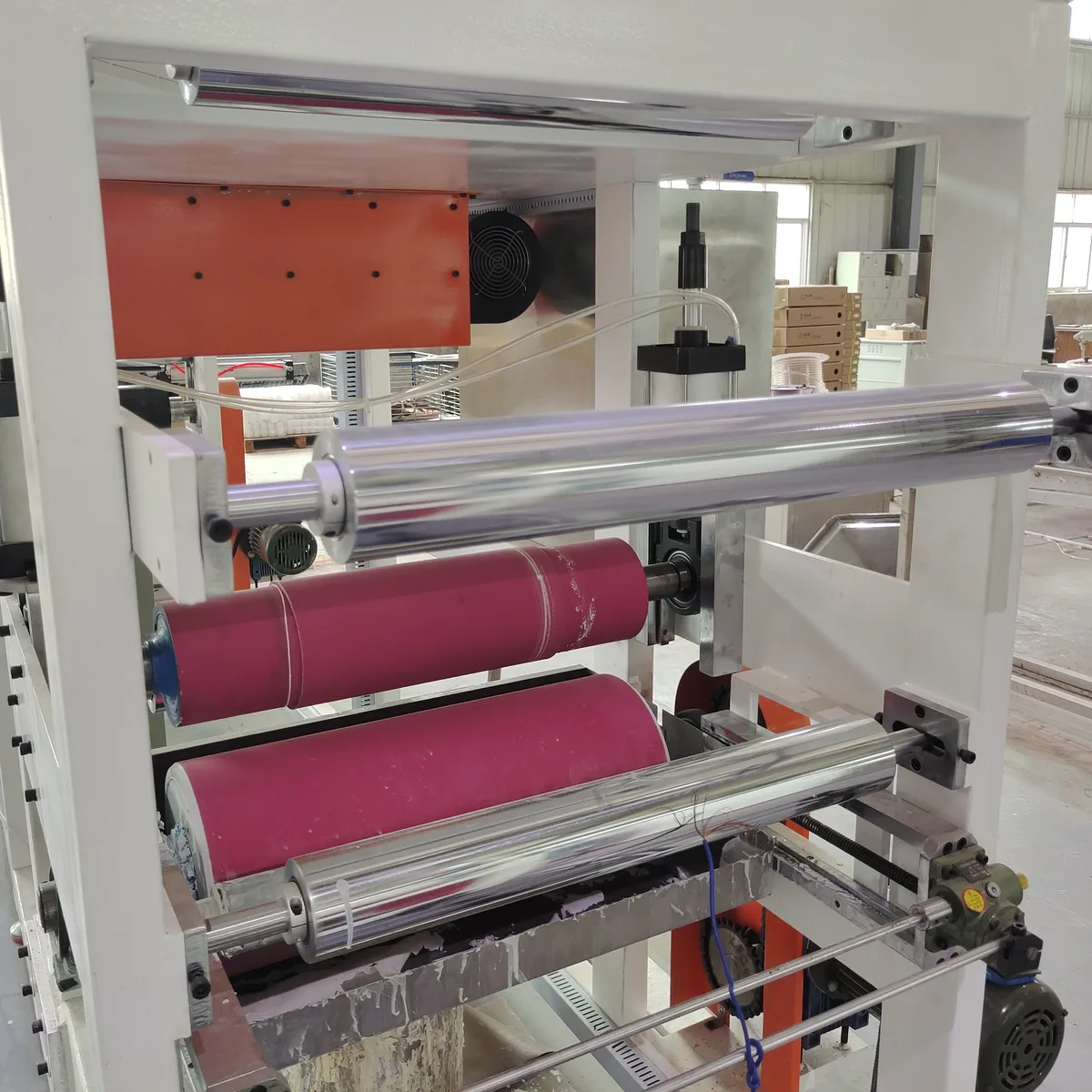
Process window, not chemistry alone, decides which surface depths are commercially achievable.
Where PVC Still Wins, and Why That Is Not Just Inertia
PVC holds the decorative surface market for four structural reasons, and none of them is that buyers have not heard about alternatives:
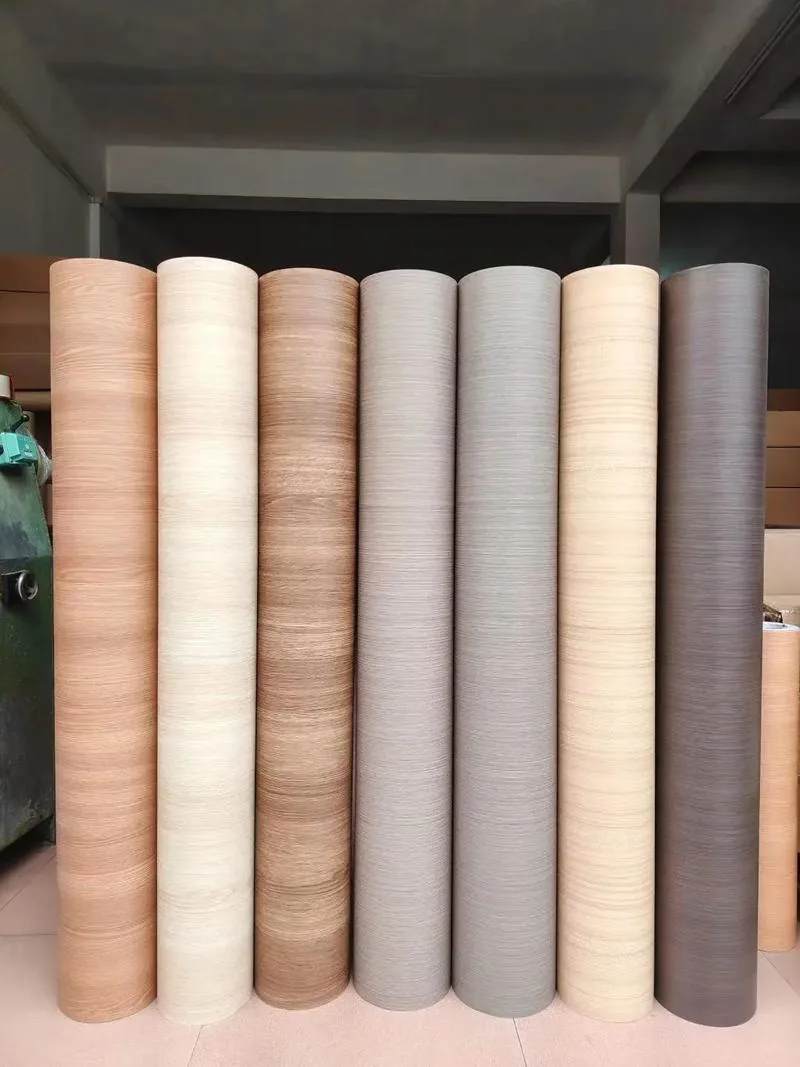
- Embossing depth. Registered 3D wood grain and deep stone textures need a polymer that flows into a fine engraved roller and holds the detail. PVC does this across the widest process window, which is why the design libraries that buyers actually order from are PVC libraries.
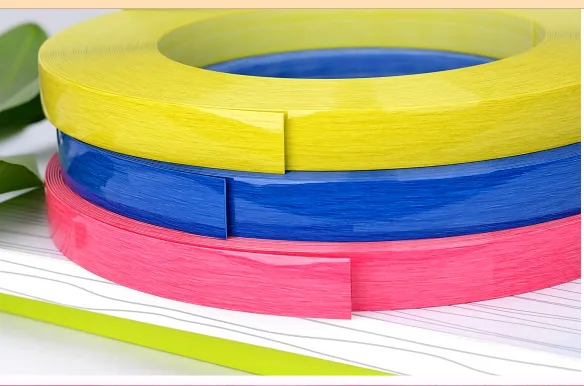
- Matched edge banding. A door is judged at the joint. PVC edge banding is extruded from the same colour match as the film, in the same factory, from 0.4 to 3mm. Very few PET or PP ranges can deliver a colour-matched edge at all, and that alone decides the order for cabinet and wardrobe producers.
- Lamination and wrapping tolerance. PVC takes flat lamination, profile wrapping and vacuum membrane pressing with broadly similar settings. Switching substrate usually means re-qualifying your glue, your press cycle and your scrap rate.
- Cost per square metre. PVC sits at the low end of the three on material cost, and the gap is widest on the printed and embossed designs where most of the volume sits.
Where PET Makes Sense
PET is the substrate most often proposed as the responsible alternative, and there are real situations where it is the right call:
- The end customer has a material policy that excludes chlorinated polymers, and the project will not proceed without meeting it
- The surface will see sustained heat load that sits near the practical ceiling of a standard PVC film
- The application is flat and unembossed, so the shallower emboss depth of PET costs you nothing
- Recyclability is a scoring criterion in a tender rather than a marketing theme
What PET is usually not good for is a deep, registered wood grain front with a matched edge. If that is your product, the honest comparison is not PVC versus PET - it is a working programme versus a project that stalls at the sampling stage.
Where PP Fits - and Where It Does Not
PP film is frequently introduced into these conversations by suppliers who do not sell furniture surfaces. Its strengths are moisture and chemical resistance, low density and an absence of chlorine. Those are excellent properties for a wet-area liner or an industrial panel facing.
They are the wrong properties for a decorative front. PP has low surface hardness and takes print and emboss poorly without additional treatment, so a wood-grain PP front quickly looks like exactly what it is. Treat PP as a technical film that occasionally appears in an interior application, not as a decorative alternative.
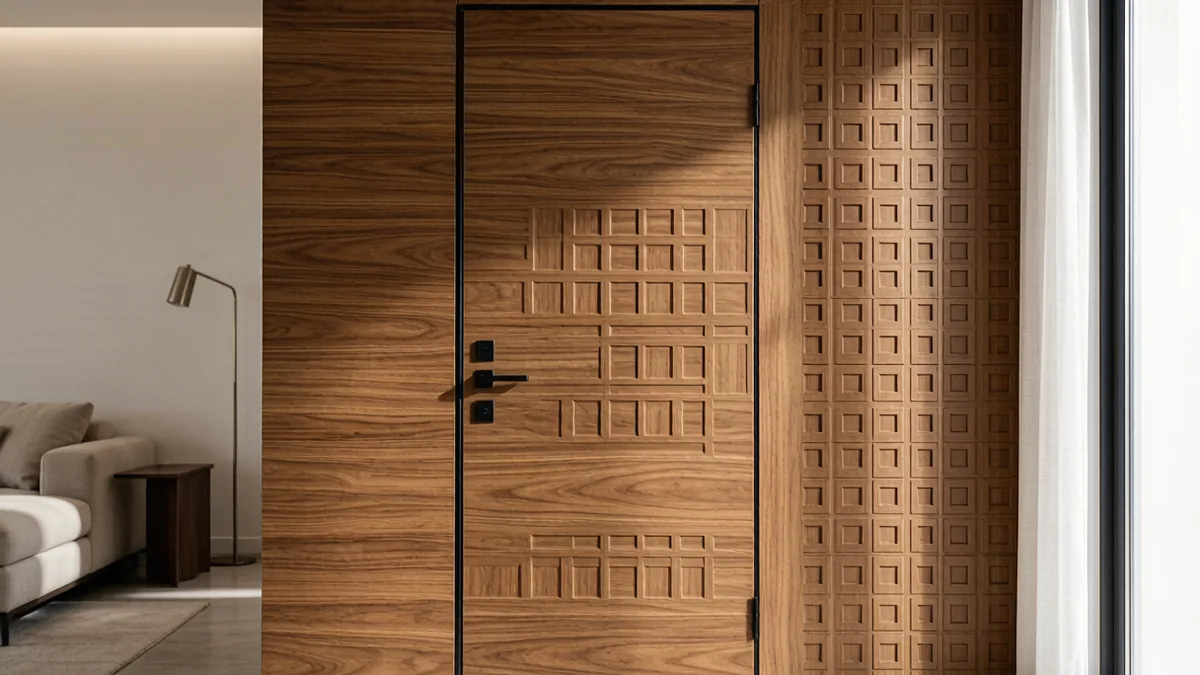
The application, not the polymer name, decides which substrate survives sampling.
What Actually Decides It
Strip the marketing out and four questions settle most substrate choices:
- Is the surface flat or formed? Formed and wrapped parts with deep draw are PVC territory. Flat panels give a new substrate a fair chance.
- Do you need a matched edge? If yes, the substrate decision is effectively made for you.
- What process would you have to re-qualify? Glue, press cycle and scrap rate are real costs, and they are not in the film price.
- Is the requirement technical or reputational? A tender scoring criterion is a technical requirement. A sentence in a sustainability report is a reputational one. They justify very different price premiums.
Documentation Travels With the Substrate
Whichever polymer you specify, the compliance question is the same: can the supplier produce the third-party report, and does it name the product? Our PVC film and edge banding are tested by SGS against REACH, RoHS 2.0 and phthalate limits, and the full reports are published rather than summarised. If you are evaluating a substrate switch for a compliance reason, that is the standard to hold every candidate to - including us.
The next decision after the substrate is the gauge. Get the thickness wrong and a correct substrate choice still fails at sampling.
Next read: PVC Decorative Film Thickness: Choosing Between 0.12mm and 0.45mm
Deciding between substrates?
Send us the application, the finish and your target market. We will tell you honestly which substrate fits - including when it is not ours.
Ask a Substrate Question