PVC Film vs Veneer vs Laminate: A Furniture Manufacturer's Comparison
Published: August 11, 2026 | By GONGDA Team
Every furniture manufacturer faces the same fundamental question at the start of a product line: what surface material should I use? The answer depends on your price point, target market, production capabilities, and performance requirements. The three main contenders — PVC decorative film, natural wood veneer, and high-pressure laminate (HPL) — each have their strengths. Here is the comparison that will help you decide.
Quick Reference: Head-to-Head
| Factor | PVC Film | Wood Veneer | Laminate (HPL) |
|---|---|---|---|
| Material cost/m² | $3–6 | $10–30 | $8–15 |
| Water resistance | ★★★★★ | ★☆☆☆☆ | ★★★★★ |
| Scratch resistance | ★★★★☆ | ★★★☆☆ | ★★★★★ |
| Heat resistance | ★★★★☆ (80°C) | ★★★☆☆ (varies) | ★★★★★ (180°C) |
| Design variety | ★★★★★ (1000+) | ★★★☆☆ (limited by nature) | ★★★☆☆ |
| 3D wrapping (profiles) | ★★★★★ | ★☆☆☆☆ | ★☆☆☆☆ |
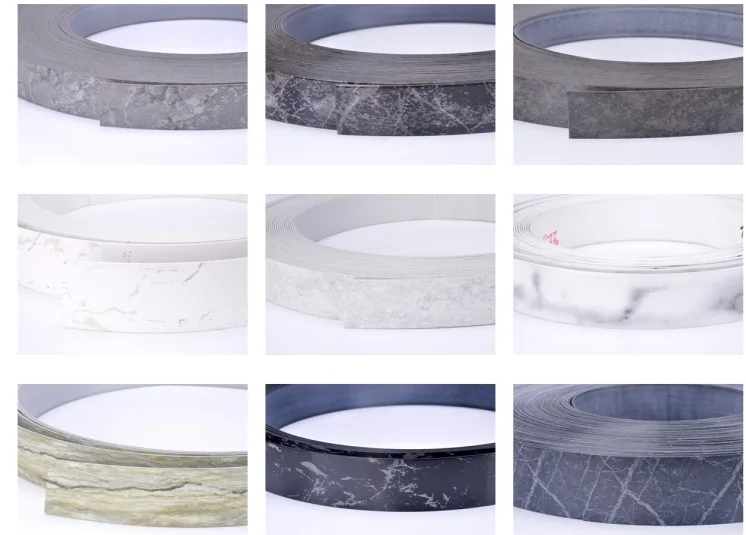
| Edge banding | Seamless (wrapping) | Visible seam | Visible seam |
| UV / color fading | ★★★★☆ (grey scale ≥4) | ★★☆☆☆ (yellowing) | ★★★★★ |
| Perceived luxury | ★★★☆☆ | ★★★★★ | ★★★☆☆ |
| Environmental | ★★★★☆ (REACH) | ★★★☆☆ (deforestation) | ★★★☆☆ |
PVC Decorative Film
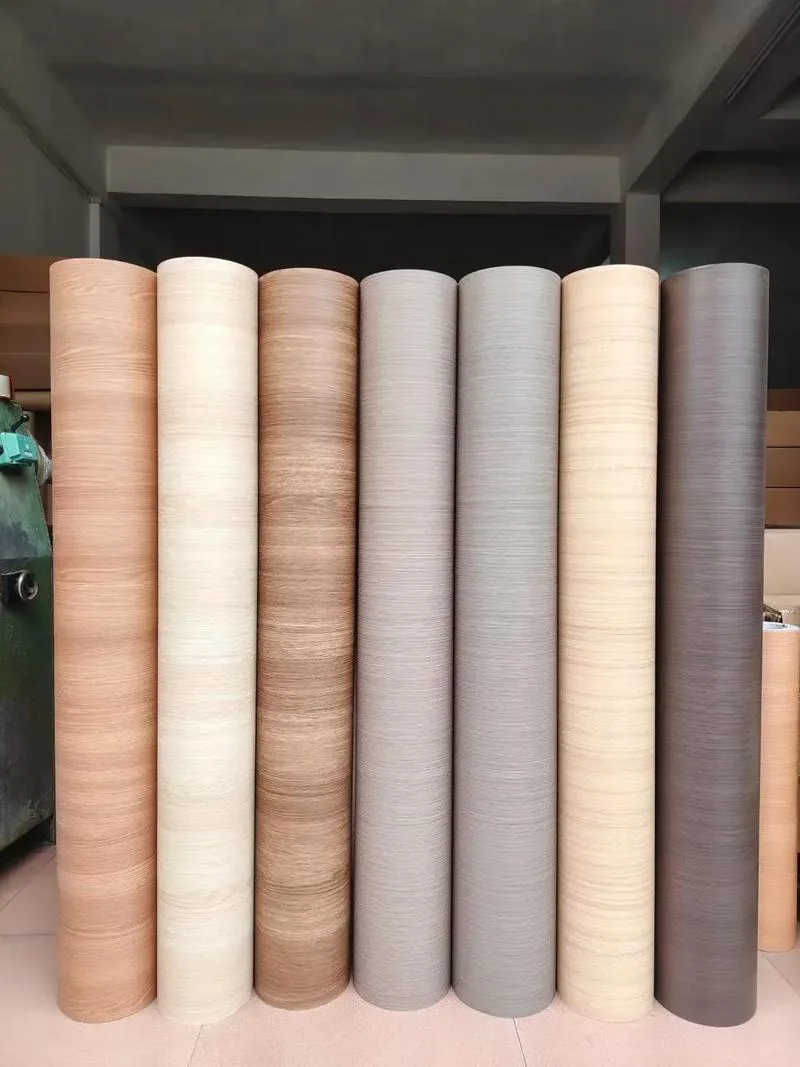
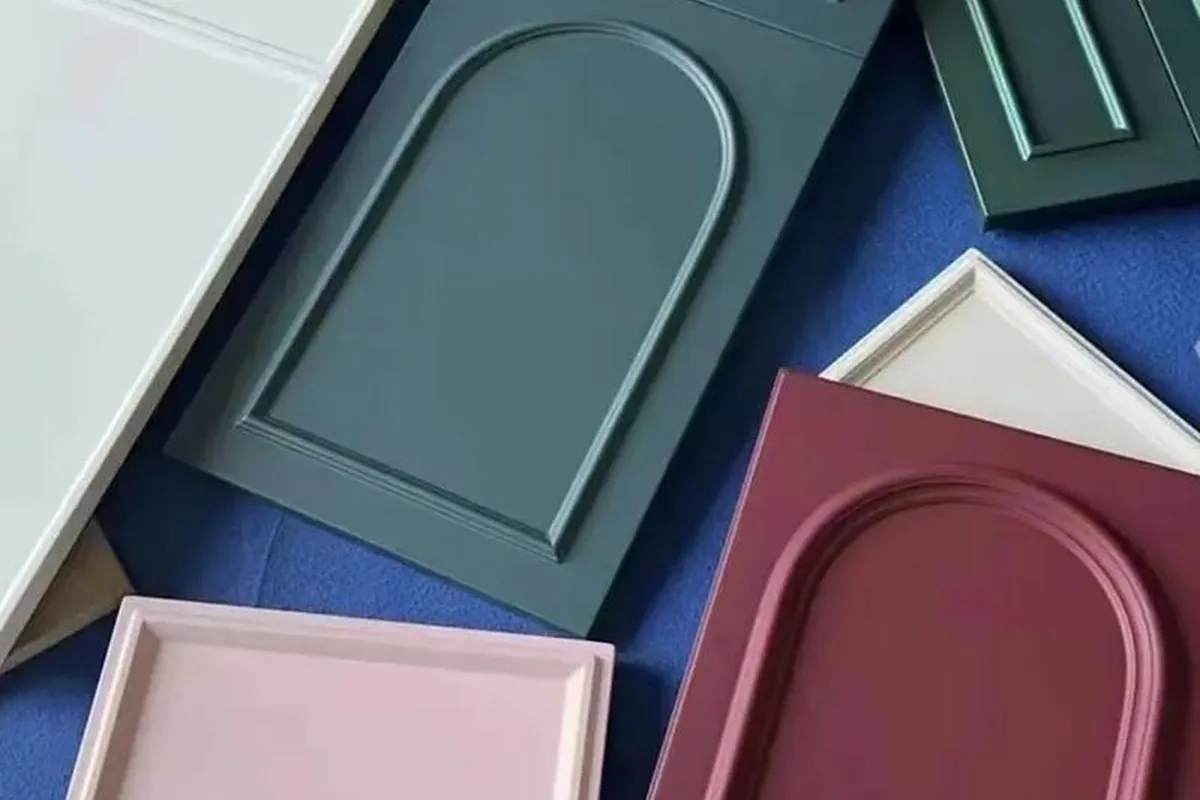
The versatile workhorse. PVC film is the dominant surface material for mass-market and mid-range furniture worldwide, and increasingly for premium segments via soft touch and super-matte finishes.
Strengths
- 3D wrapping capability: This is PVC film's killer feature. It can wrap around contoured MDF profiles — cabinet door edges, routed panels, curved furniture components — in a single vacuum pressing or membrane pressing operation. Neither veneer nor laminate can do this seamlessly.
- Waterproof: Zero moisture absorption. Ideal for kitchens, bathrooms, and humid climates.
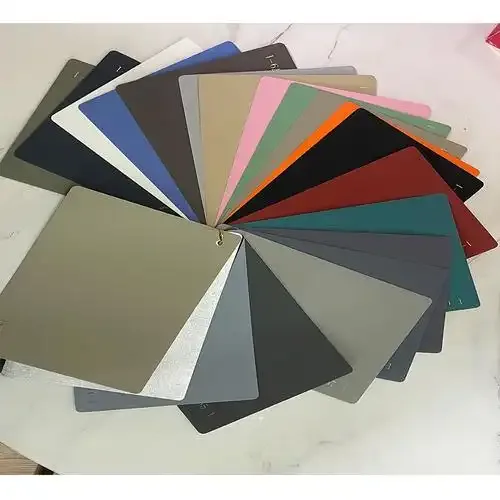
- Design breadth: 1,000+ designs from a single supplier. Wood grain, stone, solid colours, metallic, abstract — endless.
- Cost efficiency: Lowest material cost of the three, plus efficient processing.
- Consistency: Unlike natural veneer, every roll of PVC film in the same batch is identical. No color variation, no grain mismatch.
Limitations
- Heat ceiling: 80–100°C maximum. Not suitable for direct cookware contact.
- Perceived value in ultra-premium segments: Natural wood veneer still commands a higher luxury perception in certain markets.
- Solvent sensitivity: Damaged by acetone, paint thinner, and strong solvents.
Natural Wood Veneer
The traditional luxury choice. Wood veneer — a thin slice of real wood (0.3–0.6 mm) glued onto MDF or plywood — has been the premium furniture surface for centuries.
Strengths
- Authenticity: Nothing replicates real wood grain — the depth, chatoyancy, and natural variation are unique to each piece. High-end consumers value this.
- Perceived luxury: In markets where "real wood" is a selling point, veneer commands premium pricing.
- Repairable: Minor scratches can be sanded and refinished — not possible with PVC film or laminate.
Limitations
- Water damage: Veneer is porous and will absorb moisture, causing swelling, delamination, and staining. Not suitable for wet areas without heavy sealing.
- UV yellowing: Natural wood changes color with light exposure — some species within months.
- Cost & availability: Premium species (walnut, teak, zebrano) are expensive and supply-constrained.
- Inconsistency: No two sheets are identical, which creates production headaches — matching grain across cabinet fronts is labor-intensive.
- Limited 3D capability: Veneer cracks when bent around sharp profiles. Curved furniture requires specialized veneer grades and processes.
High-Pressure Laminate (HPL)
The durability champion. HPL is a multi-layer sheet of kraft paper impregnated with phenolic resin, topped with a decorative paper layer and a melamine overlay. It is pressed under high heat (150°C) and pressure (70–100 bar), producing an extremely hard, dense panel.
Strengths
- Scratch & impact resistance: HPL is the toughest of the three materials. Used in laboratory benches, hospital surfaces, and high-traffic commercial furniture.
- Heat resistance: Withstands up to 180°C — hot pans can be placed directly on it.
- Chemical resistance: Resists most household chemicals, disinfectants, and mild acids.
Limitations
- No 3D wrapping: HPL is a rigid sheet. It cannot wrap around contoured edges or profiles. Cabinet doors with HPL surfaces always have a visible edge seam that requires separate edge banding.
- Higher cost: More expensive than PVC film, both in raw material and processing.
- Limited flexibility: Brittle when thin; cannot bend around curves below a certain radius.
- Design variety: Fewer design options than PVC film, with higher minimum order quantities for custom patterns.
Decision Matrix: Which Material for Which Application?
| Application | PVC Film | Veneer | HPL |
|---|---|---|---|
| Kitchen cabinet doors (with profile) | ✓ Best | ✗ | ✗ |
| Kitchen countertops | ✗ | Limited | ✓ Best |
| Wardrobe doors (flat) | ✓ Good | ✓ Best | ✓ Good |
| Bathroom vanity | ✓ Best | ✗ | ✓ Good |
| Office desk surfaces | ✓ Good | Limited | ✓ Best |
| Hotel furniture | ✓ Best | ✓ Good | ✓ Good |
| Curved/fancy furniture | ✓ Best | ✗ | ✗ |
Cost-Benefit Summary
- Choose PVC film if you need waterproof performance, 3D profile wrapping, broad design selection, and the best price-performance ratio. This covers 70%+ of furniture manufacturing volume globally.
- Choose wood veneer if your brand positioning demands the authenticity of real wood, you are selling into markets where "solid wood" carries premium value, and the furniture will be used in dry environments.
- Choose HPL if the surface will face extreme wear — laboratory benches, high-traffic counters, public-area furniture — and the design is flat-panel (no 3D wrapping needed).
Related: PVC Film for Kitchen Cabinets | Customizing PVC Decorative Film for OEM
Not sure which material fits your product?
Tell us about your furniture line and target market — we'll recommend the right surface solution.
Get Expert Advice