PVC Film and Sustainability: REACH, Formaldehyde, CBAM and Recycled Resin
Published: September 29, 2026 | By GONGDA Team
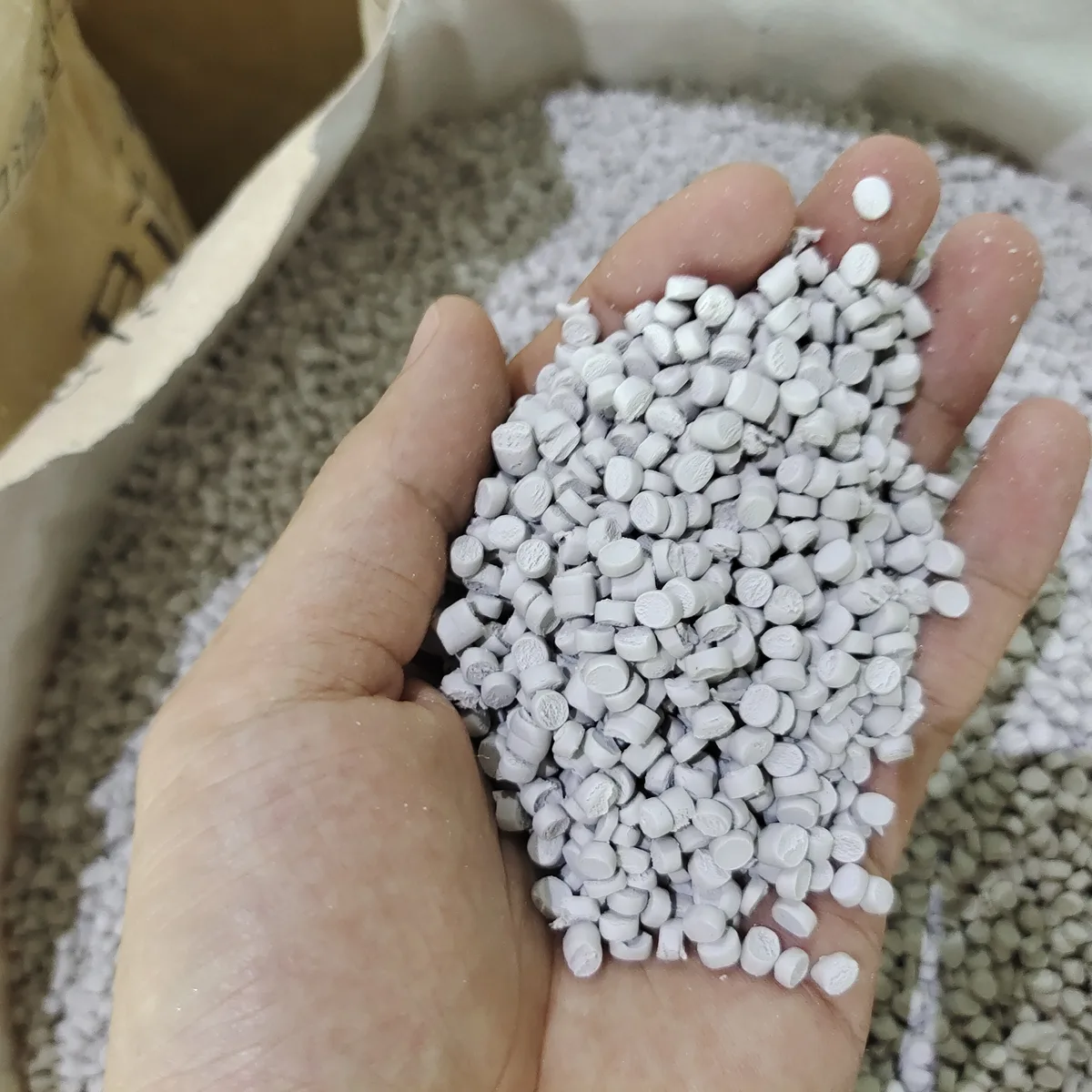
Sustainability stopped being a marketing theme and became a line on the specification sheet. A furniture brand selling into Europe now has to demonstrate, in writing, that the film on its cabinet door does not contain substances it is not permitted to sell. That is not ethical posturing - it is a legal requirement with a penalty attached.
This article walks through the regulation stack that actually applies to decorative PVC film, clears up the formaldehyde confusion that causes more wasted budget than any other issue in the category, and explains the new trade measure that has rarely been budgeted for.
The Regulation Stack You Actually Have to Satisfy
Buyers usually hear 'REACH compliant' and assume the work is done. It is not. REACH is the substance restriction layer; the table below is what a furniture buyer selling into multiple markets is actually being asked for.
| Standard | Jurisdiction | What it governs | How to verify |
|---|---|---|---|
| REACH (EC) 1907/2006 | European Union | Restricted substances, including SVHC declaration | Report naming the Restricted List and the SVHC candidate list version tested |
| RoHS 2011/65/EU | European Union | Heavy metals including lead, mercury, cadmium | Report stating each substance and its measured value |
| Phthalate restriction | EU, California | Plasticisers DEHP, DBP, BBP, DIBP | Declared-absent statement plus an independent test report |
| EN 717-1 / EN 13986 | European Union | Formaldehyde emission from panels | Classification statement: E1, E0.5 or ENF |
| CARB 93120 / TSCA Title VI | United States | Formaldehyde emission in composite wood | Certification issued by a certified third-party testing laboratory |
| VOC / indoor air certification | North America | Volatile organic compound emission | Independent indoor air quality certification |
| CBAM | EU imports, from 2026 | Embedded carbon on imported goods | Emissions data declared per shipment through the registry |
Formaldehyde Is Not a Film Problem - or Is It?
This is the single most confusing point in the category and the one most often handled badly. Decorative PVC film does not contain formaldehyde. The formaldehyde is in the substrate - the MDF or particleboard that the film is pressed onto.
Because the film covers the panel, buyers often assume the film is responsible for the classification. It is not, and the practical consequence is significant: a Class E1 substrate wrapped in film without any restriction declaration still meets E1, and an ENF substrate does not drop in class because of what is applied on top.
The confusion matters commercially because buyers are asked to declare panel class to the customer. Getting the attribution wrong leads either to over-specifying - paying for a higher substrate class than the application requires - or to under-claiming, which is where regulatory risk actually lives.
How to Handle It Correctly
- Keep the film and the substrate on separate specification lines in your documentation
- Request the formaldehyde classification from the panel manufacturer, not the film supplier
- Ask the film supplier for the VOC and phthalate declarations that genuinely belong to them
- Avoid marketing language that attributes the panel class to the film - it invites a challenge
Water-Based Ink Is Now Table Stakes
Where design is printed rather than calendered as a solid colour, the ink system determines the VOC profile. Oil-based inks require solvent recovery infrastructure that many buyers no longer want to operate, and several major retail and government specifications now reject them outright.
Water-based inks carry a slightly different set of trade-offs around drying time and achievable gloss range, and the honest engineering decision depends on your production line. We cover the technical comparison in our dedicated ink guide. What has changed is the default: water-based is no longer the premium option, it is the baseline expectation.
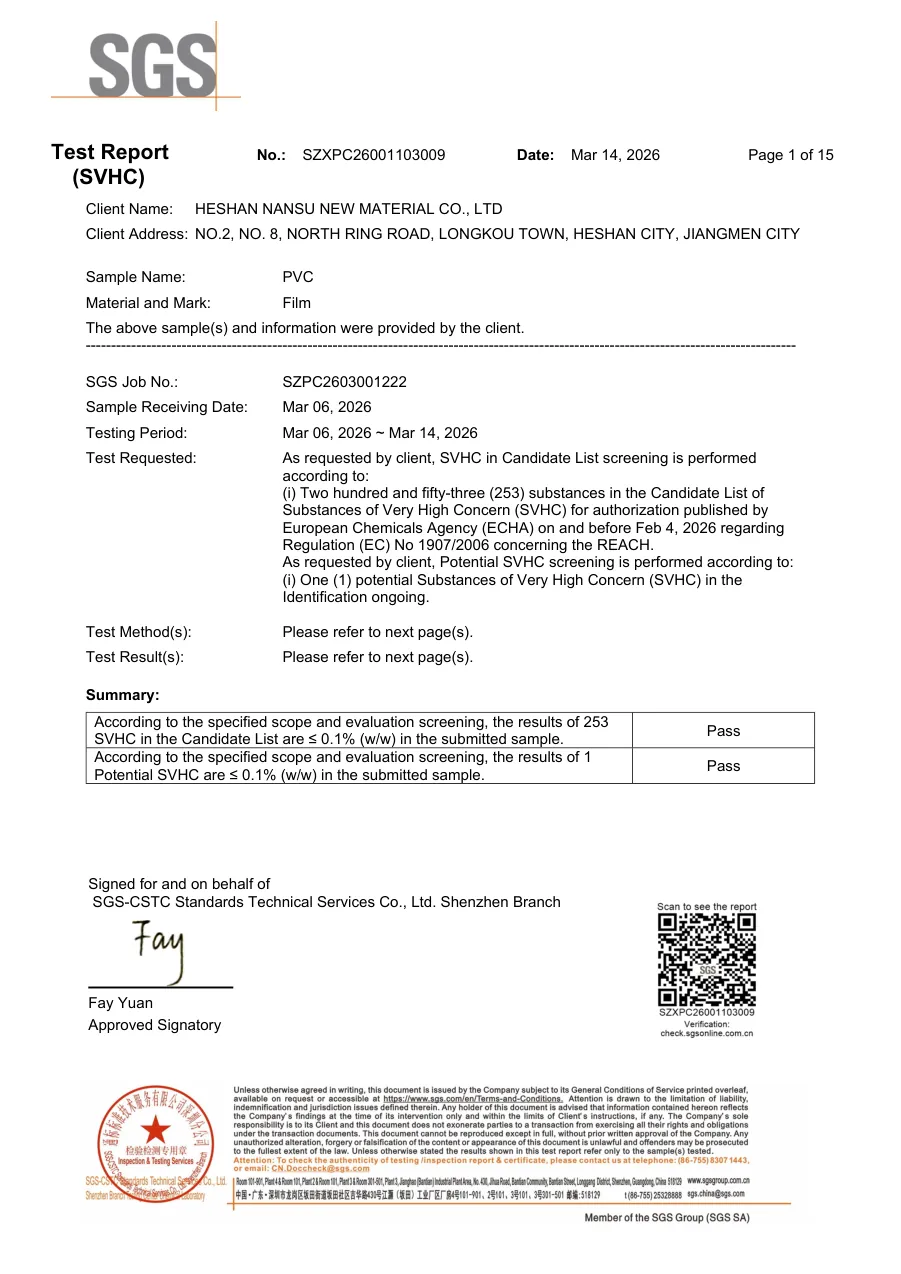
The list version and the laboratory name are what make a report usable in customs review.
Recycled and Bio-Based Resin: What Is Real
The vocabulary here has outrun the supply. Three distinct claims circulate in quotations, and it is worth knowing which one you are reading.
- Post-industrial recycled content - material recovered from factory offcuts and unused rolls, then re-extruded. Genuinely available, and it generally has no meaningful effect on end-use performance for decorative film. This is the claim to ask for.
- Post-consumer recycled content - material recovered from consumer waste streams. Meaningful PVC recovery at consumer level is limited, and formulations with high post-consumer loading rarely meet the abrasion and heat requirements of furniture film.
- Bio-based or bio-derived resin - resin derived from vegetable oils. Available in specific grades, priced as a premium material, and usually specified for one application rather than a full range.
Ask for the percentage, the source stream and the test report. 'Made from recycled materials' without those three pieces is a slogan.
CBAM: The Line Item Nobody Budgeted
The Carbon Border Adjustment Mechanism extends EU carbon pricing to imported goods, and imported polymer products fall within scope. The reporting obligation applies from 2026, with financial liability following behind. For a furniture importer whose film is produced in East Asia, embedded emissions data becomes part of the import paperwork.
The impact is not yet large enough to change product choices, and it will not be felt uniformly - but the buyer who asks for the supplier's emissions data now will be ahead of the one who discovers the requirement at customs in two years. The right question in 2026 is not 'does this change my price' but 'can my supplier produce the data if I need it'.
How to Verify a Supplier's Green Claims
Six questions separate documentation from assertion:
- Which laboratory issued the report, and what is the report reference number?
- Against which version of the REACH Restricted List and SVHC candidate list was the test run?
- Does the report name the exact product and batch, or a product family?
- Is the compliance documentation shipped with the order, or available only on request?
- Can you document the source stream behind any recycled content claim?
- Can you produce embedded carbon data per shipment, and what methodology do you use?
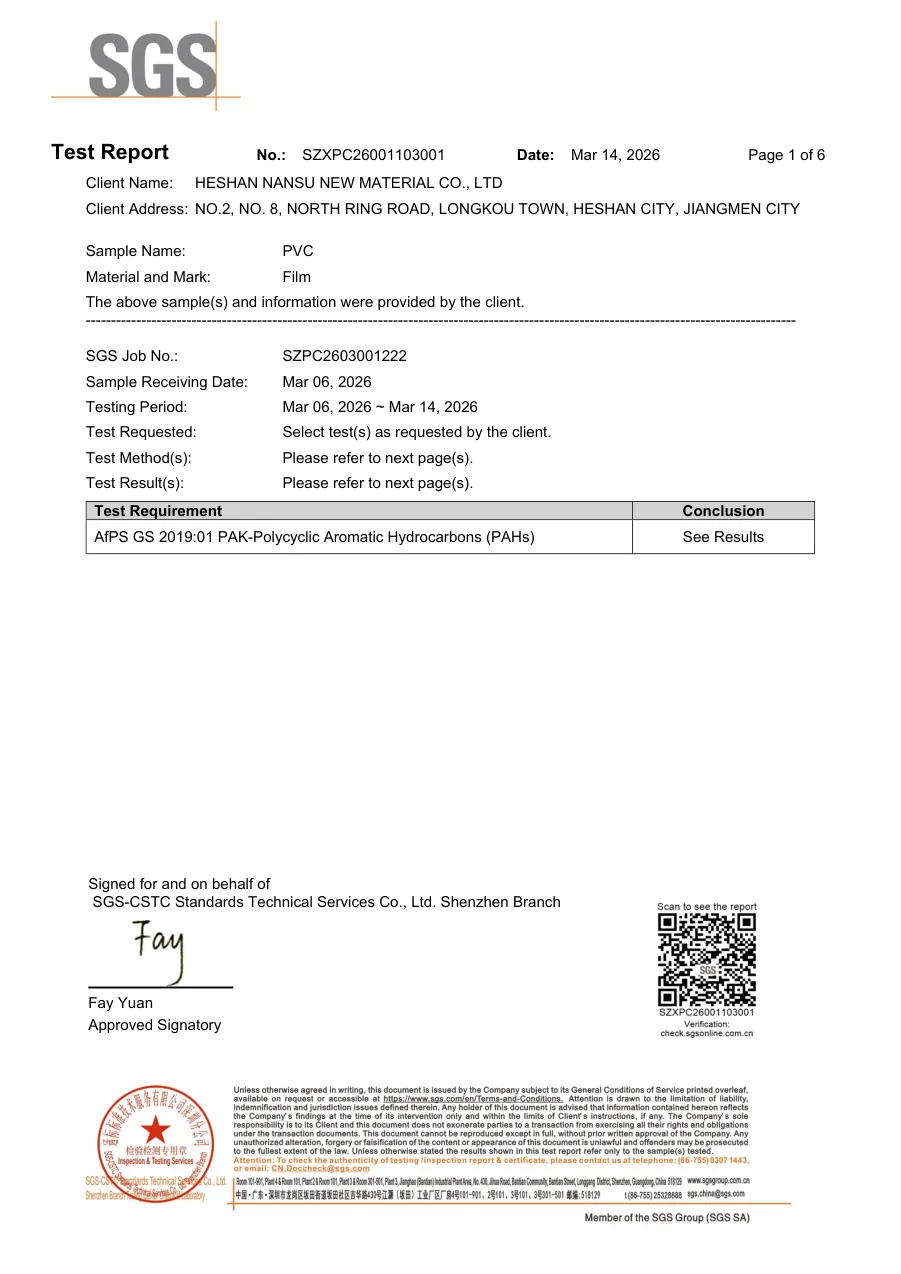
A report that names the laboratory and the list version is defensible. Anything else is a declaration.
A manufacturer who holds the paperwork will answer all six in a single email. The effort required is the signal.
Next read: How to Vet a PVC Film Supplier: 12 Red Flags Before You Order
Need the paperwork, not the promise?
We supply the full test report pack with every order - REACH, RoHS, phthalates and formaldehyde classification.
Request Compliance Pack