PVC Film for Kitchen Cabinets: The Complete Buyer's Guide
Published: August 11, 2026 | By GONGDA Team
The kitchen is the most demanding room for any surface material. Heat, steam, cooking oil splatter, acidic spills, constant cleaning — and you still want it to look good after years of daily use. That is why PVC decorative film has become the dominant surface material for kitchen cabinet doors in markets from Europe to the Middle East to Southeast Asia. Here is everything a furniture manufacturer or importer needs to know about specifying PVC film for kitchen applications.
Why PVC Film Beats Alternatives for Kitchens
100% Waterproof
Unlike wood veneer, MDF with paint, or paper-based melamine, PVC film is inherently waterproof. There is no porous layer for moisture to penetrate. Kitchen cabinet doors wrapped in PVC film will not swell, delaminate, or bubble — even in the steam-heavy environment above a kettle or dishwasher. This is the single biggest reason PVC film dominates the kitchen cabinet market.
Heat Tolerance
Kitchen-grade PVC film is formulated with higher heat stabilizer content, allowing continuous exposure up to 80°C and short-term peaks of 100°C. This means cabinet doors near the oven or cooktop — where surface temperatures can reach 50–70°C during cooking — remain stable. Standard interior-grade films may soften or deform under these conditions, so always specify kitchen-grade to your supplier.
Easy Cleaning & Hygiene
PVC film creates a non-porous, seamless surface that bacteria and mold cannot penetrate. Spills wipe off with a damp cloth — no residues, no staining. For households with children or commercial kitchens, this hygiene advantage is significant. Glossy and matte finishes are especially easy to clean; soft touch finishes require gentler care but still outperform painted or veneered surfaces.
Design Versatility
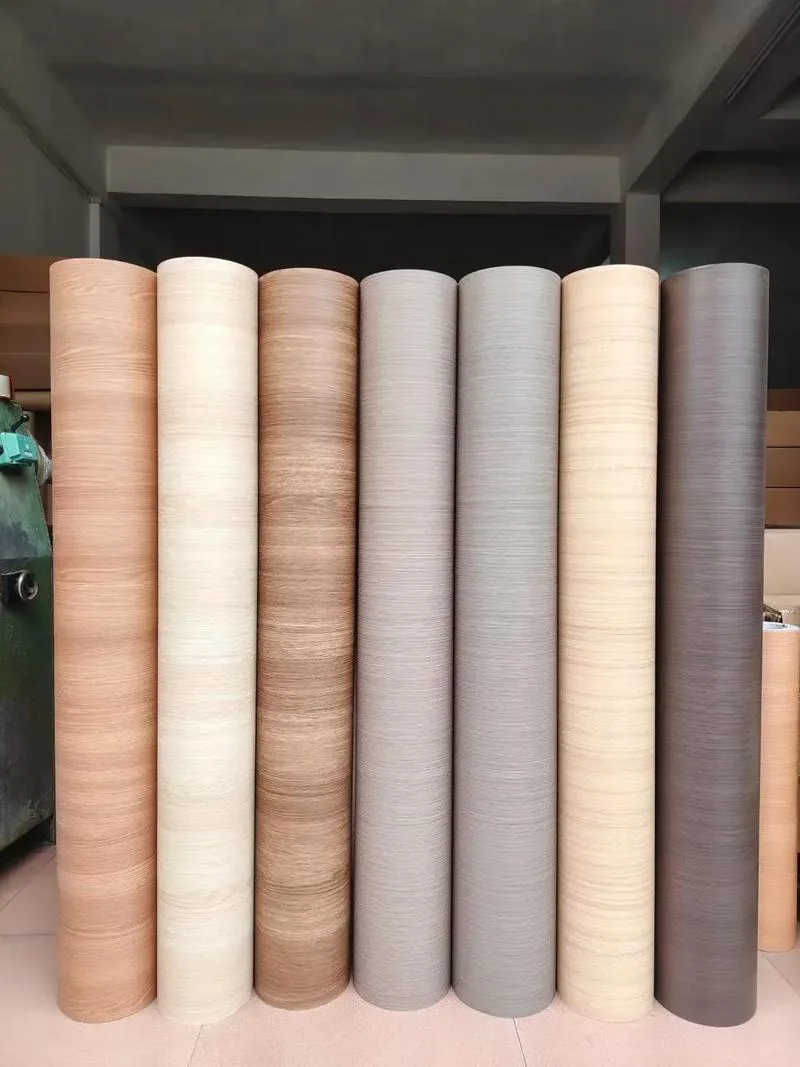
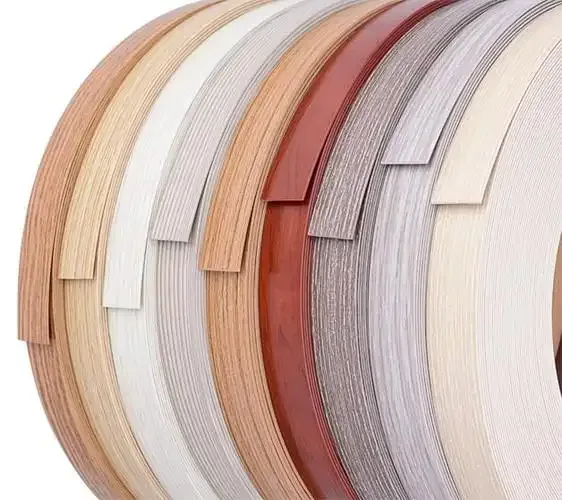
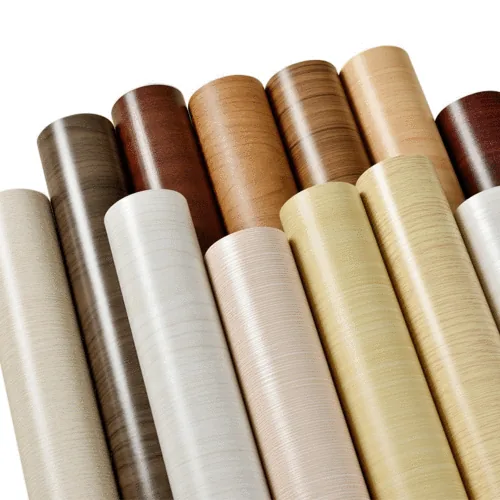
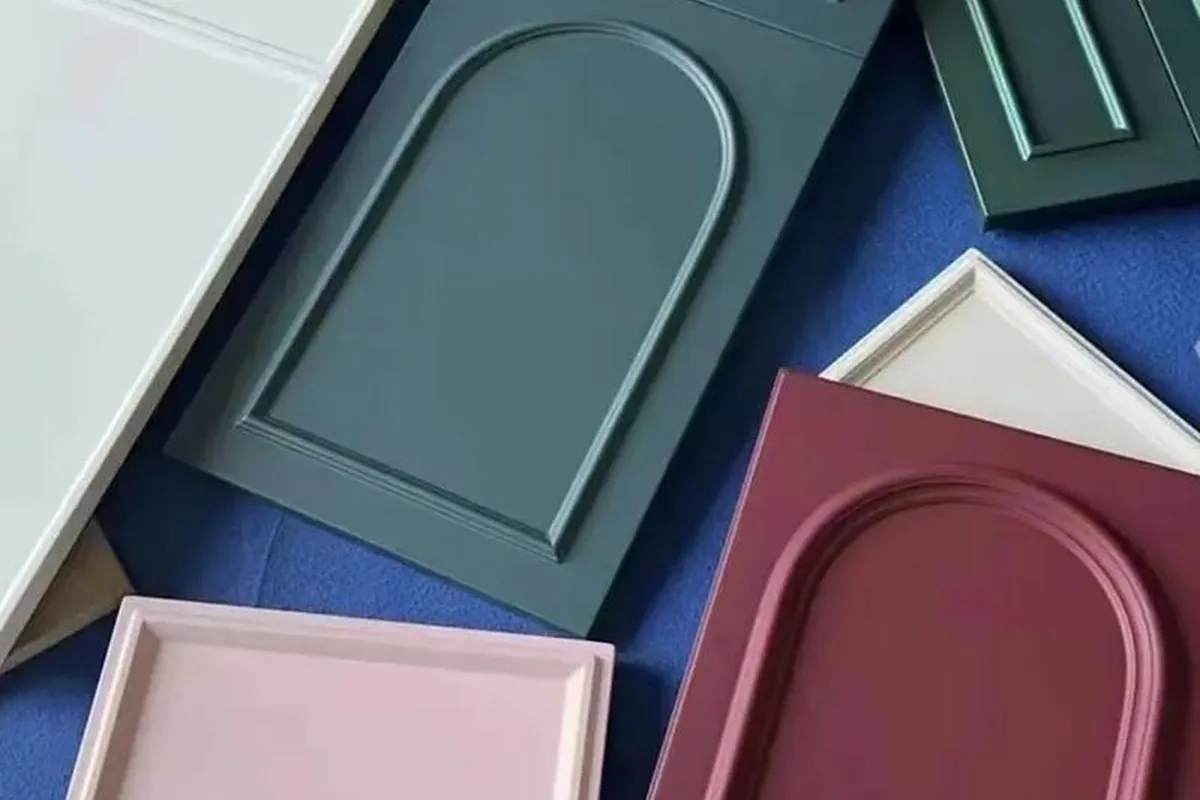
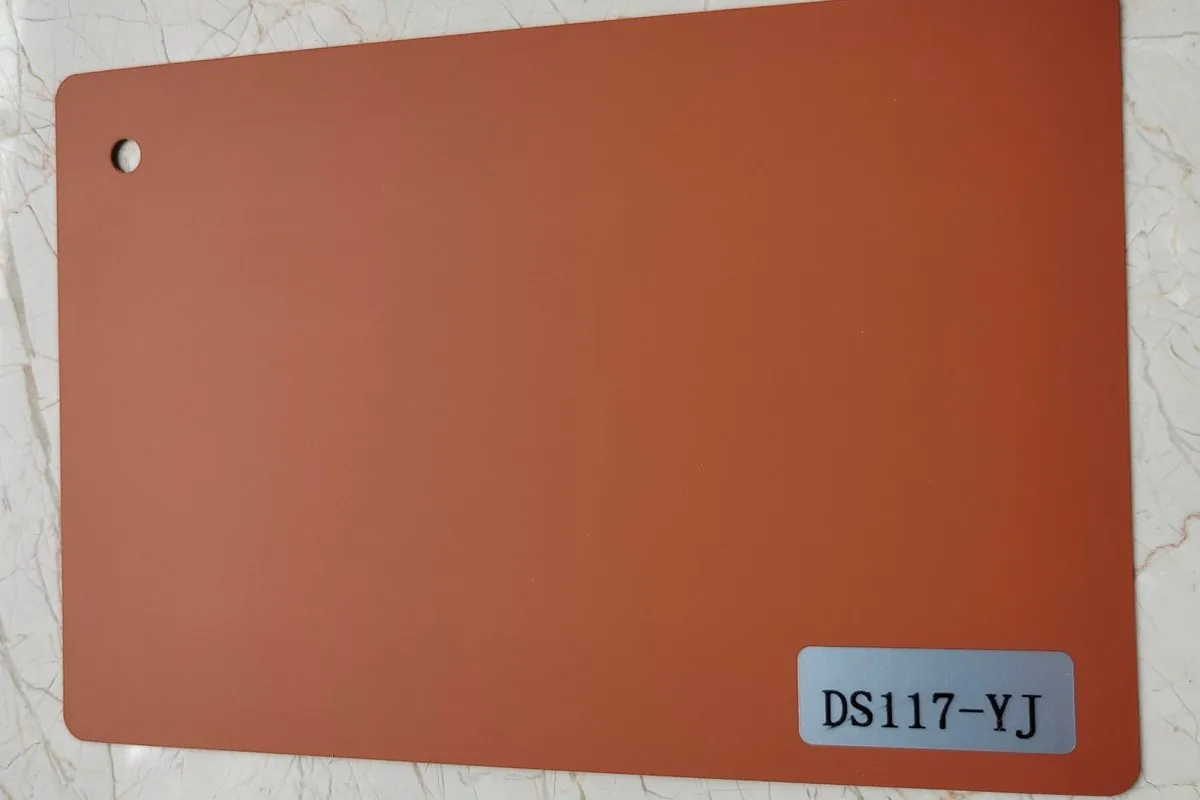
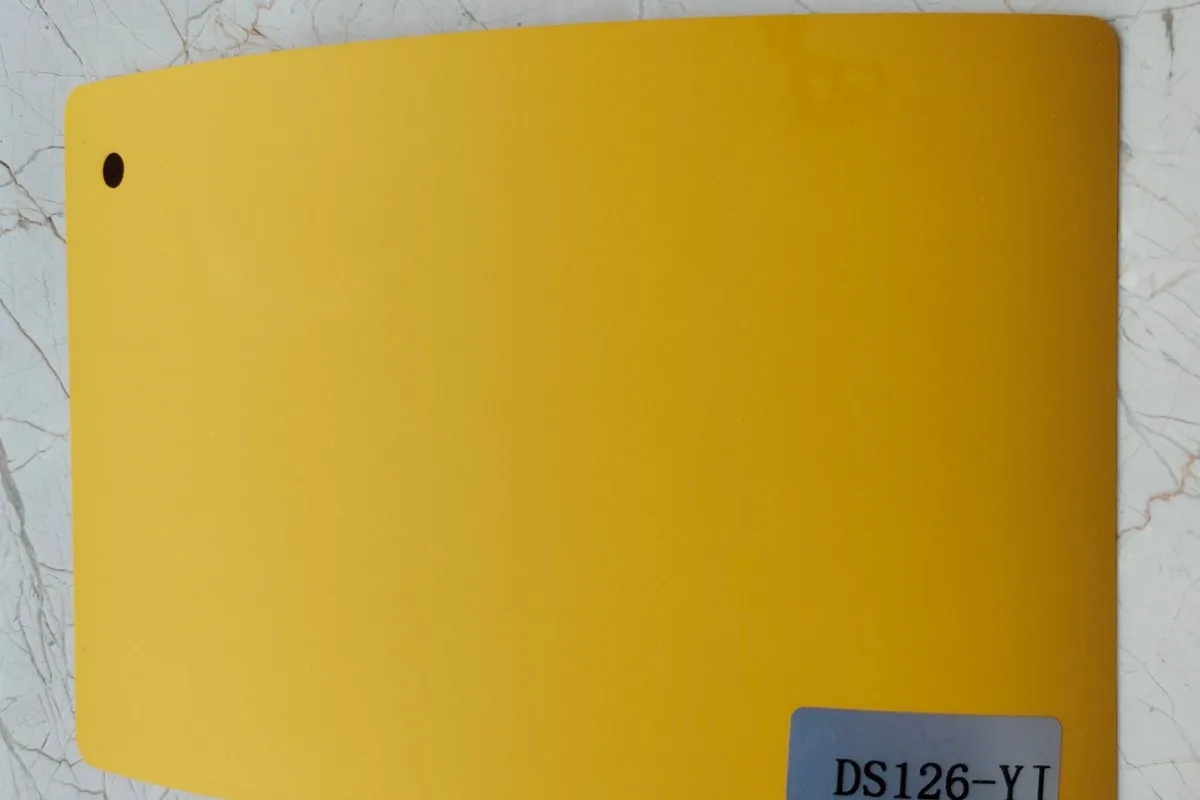
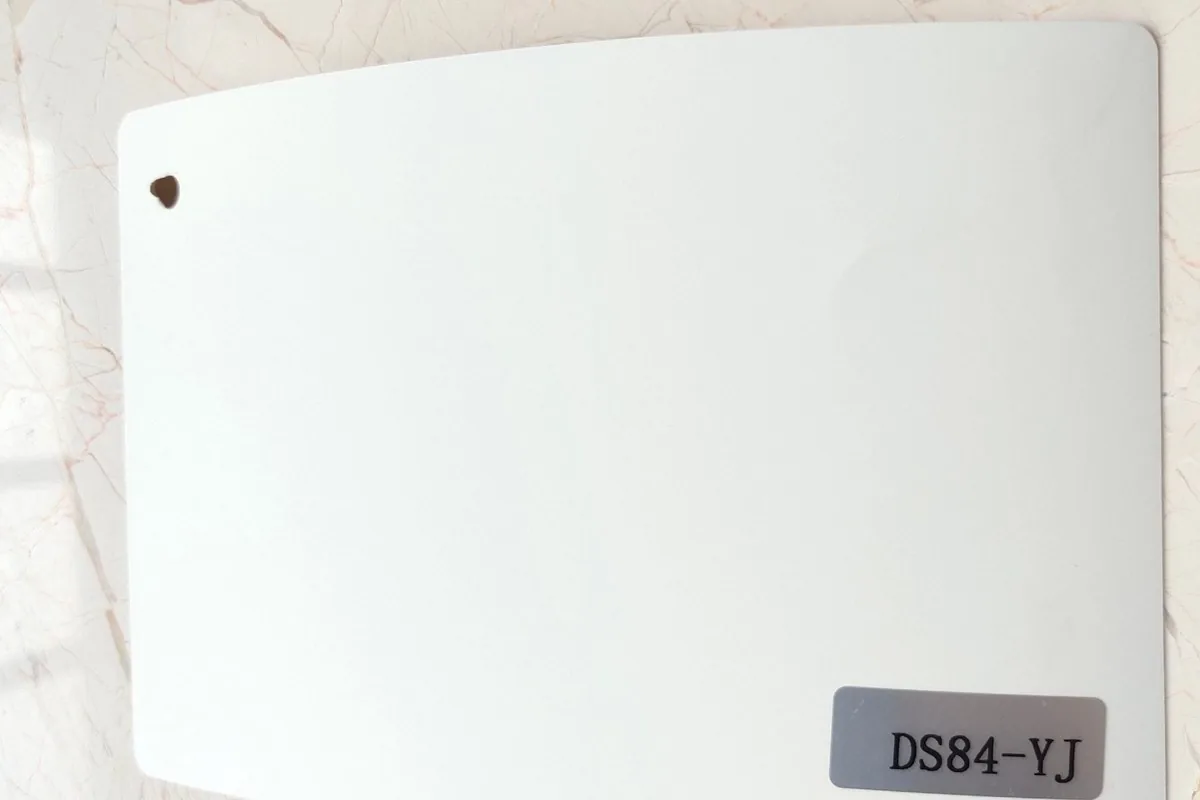
PVC film for kitchens is available in an enormous range — solid colors (white, grey, beige, black), wood grains (oak, walnut, teak, ash), stone and marble effects, metallic finishes, and even textured concrete looks. This design freedom allows kitchen manufacturers to serve every market segment — budget, mid-range, and premium — from a single material platform.
Cost Comparison: PVC Film vs Alternatives
| Surface Material | Material Cost/m² | Processing Cost | Total (est.) |
|---|---|---|---|
| PVC film + MDF | $3–6/m² | Low (vacuum press) | $8–14/m² |
| Melamine + particleboard | $2–4/m² | Very low | $4–7/m² |
| High-pressure laminate (HPL) | $8–15/m² | Medium | $15–25/m² |
| Wood veneer + MDF | $10–30/m² | Medium-high | $18–40/m² |
| Acrylic / solid surface | $20–50/m² | High | $30–70/m² |
PVC film hits the optimal cost-performance sweet spot: significantly cheaper than wood veneer, acrylic, or HPL, while offering comparable or better kitchen-specific performance (waterproof, cleanable, durable).
Specifying the Right PVC Film for Kitchen Cabinets
Not all PVC film is kitchen-grade. When ordering, specify:
- Thickness: 0.18–0.55 mm. Kitchen cabinet fronts need ≥ 0.25 mm for edge wrapping durability. 0.35–0.45 mm is the industry standard for premium kitchens.
- Heat stabilizer: Kitchen-grade calcium-zinc (Ca/Zn) stabilizer formulation. Avoid lead-based stabilizers — they are banned in the EU and major export markets.
- Topcoat: Polyurethane (PU) topcoat, minimum 5 μm dry film thickness, with crosslinking for chemical resistance.
- Certifications: REACH, RoHS, and preferably ISO 9001 factory certification. For food-contact-adjacent applications, ensure phthalate-free plasticizer (DOTP instead of DOP).
- Glue compatibility: Confirm the film's backside primer is compatible with your lamination adhesive (PUR hot melt, EVA, or solvent-based).
Popular Kitchen Cabinet Finishes by Market
| Region | Top-Selling Finishes | Trend |
|---|---|---|
| Middle East | High-gloss white, gold-vein marble | Growing soft touch interest |
| Europe | Matte wood grain (oak, walnut), solid matte colours | Super-matte trending strongly |
| Southeast Asia | Glossy + wood grain mix | Modern minimalist designs |
| Africa | Bold wood grains, dark solid colours | Value-driven growth |
Common Kitchen Application Mistakes to Avoid
- Using interior-grade film in kitchens: Interior-grade film lacks the heat stabilizers needed for kitchen environments. It will soften and deform above cooktops and near ovens.
- Under-specifying film thickness: Kitchen cabinet edges see heavy wear. Film thinner than 0.25 mm may tear at corners during vacuum pressing or edge wrapping.
- Ignoring glue compatibility: The film-backside primer must match your adhesive system. Test with small samples before committing to a bulk order.
- Skipping chemical resistance testing: Kitchen cleaners vary by region. Always test your chosen film against the cleaning products commonly used in your target market.
Related: PVC Film vs Veneer vs Laminate: Full Comparison | Soft Touch PVC Film Durability & Maintenance
Sourcing PVC film for kitchen cabinets?
Tell us your target market and we'll recommend the best-selling kitchen finishes — with free A4 swatches.
Get Kitchen Samples