PVC Edge Banding Adhesives: EVA, PUR and Hot Air Compared
Published: October 11, 2026 | By GONGDA Team
When a joint fails, the strip gets blamed. Most of the time the strip is the only component in the assembly that behaved exactly as specified. The bond is a system: adhesive, temperature, pressure, feed rate and time, and the strip only has to be compatible with it.
This guide compares the three bonding systems in use today, sets out where each one earns its cost, and lists the machine settings that decide whether the joint holds in a kitchen or fails in a showroom. It sits alongside our guide to decorative film thickness, because strip gauge and film gauge are usually decided on the same purchase order.
The Three Bonding Systems
| System | Adhesive | Water and heat resistance | Where it fits |
|---|---|---|---|
| EVA hot melt | Ethylene-vinyl acetate, applied from a glue pot | Moderate - softens with sustained heat, vulnerable to standing water | Dry interior furniture: bedroom, office, general cabinetry |
| PUR hot melt | Polyurethane reactive, applied from a PUR melter and cured by moisture | High - effectively waterproof once cured, tolerant of higher heat | Kitchens, bathrooms, laundry, contract and hospitality work |
| Hot air / laser | None - a functional layer on the strip is activated by heat | High - comparable to PUR, and no visible glue line | Visible edges and high-specification fronts where the joint is on show |
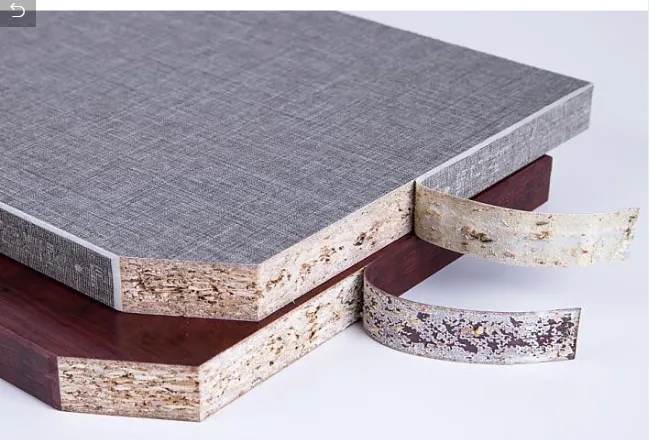
The joint is what the customer judges, and the joint is decided by the bond rather than the strip.
EVA: The Standard, and Where It Stops
EVA is the default because it is forgiving and cheap to run. It accepts a wide temperature window, cleans up easily and does not demand special handling. For the majority of furniture produced in dry, ambient conditions it is the correct choice.
It stops being correct in two situations. The first is sustained heat - an edge next to a hob, a dishwasher panel or a surface that sits in direct sun. EVA softens and the joint opens. The second is standing water. A wet kitchen joint that would survive decades with PUR will lift with EVA within a season.
PUR: When the Cost Is Worth It
PUR costs more per kilogram, needs a dedicated melter, and punishes poor housekeeping - cured PUR in a pot or on a roller is a scrap part. What it buys is a cross-linked bond that no longer melts at furniture temperatures and does not care about water.
Specify it when the application is wet, hot, or contract. Otherwise you are paying a premium and adding maintenance discipline for protection the product does not need.
Hot Air and Laser: No Glue Line
These systems remove the adhesive entirely. The strip carries a functional layer that is melted and pressed as it is applied, so there is no glue reservoir, no glue pot and no visible line where the adhesive would have sat. For a dark or high-gloss edge the visual difference is significant.
The catch is compatibility. Not every strip can be run this way - the banding has to be produced with the correct functional layer for the machine. If you plan to use hot air, say so at the order stage rather than assuming any strip will run.
Machine Settings That Decide the Joint
These are the parameters that produce most of the rework in a plant. Each wrong setting has a characteristic symptom.
| Parameter | Typical setting | Symptom when wrong |
|---|---|---|
| Glue pot temperature | Per the adhesive datasheet - usually within a 10-20 degrees C window | Too cold: weak, cloudy bond. Too hot: degraded adhesive, brittle joint |
| Feed rate | Matched to the strip thickness and the machine's rated speed | Too fast: incomplete wetting. Too slow: scorched adhesive, burn marks |
| Pressure roller | Firm, even contact across the full strip width | Light pressure: air trapped in the joint. Excessive: strip distorted at the edges |
| End trimming | Blades sharp, correctly set for the strip thickness | Dull blades: ragged ends. Wrong setting: cut into the panel face |
| Top and bottom trimming | Flush with the panel surface, minimal overhang | Proud trimming: visible step. Over-trimming: gouged panel |
| Scraping and buffing | Light and progressive | Aggressive scraping: white line or burnished gloss; missed on purpose: dull, scratched edge |
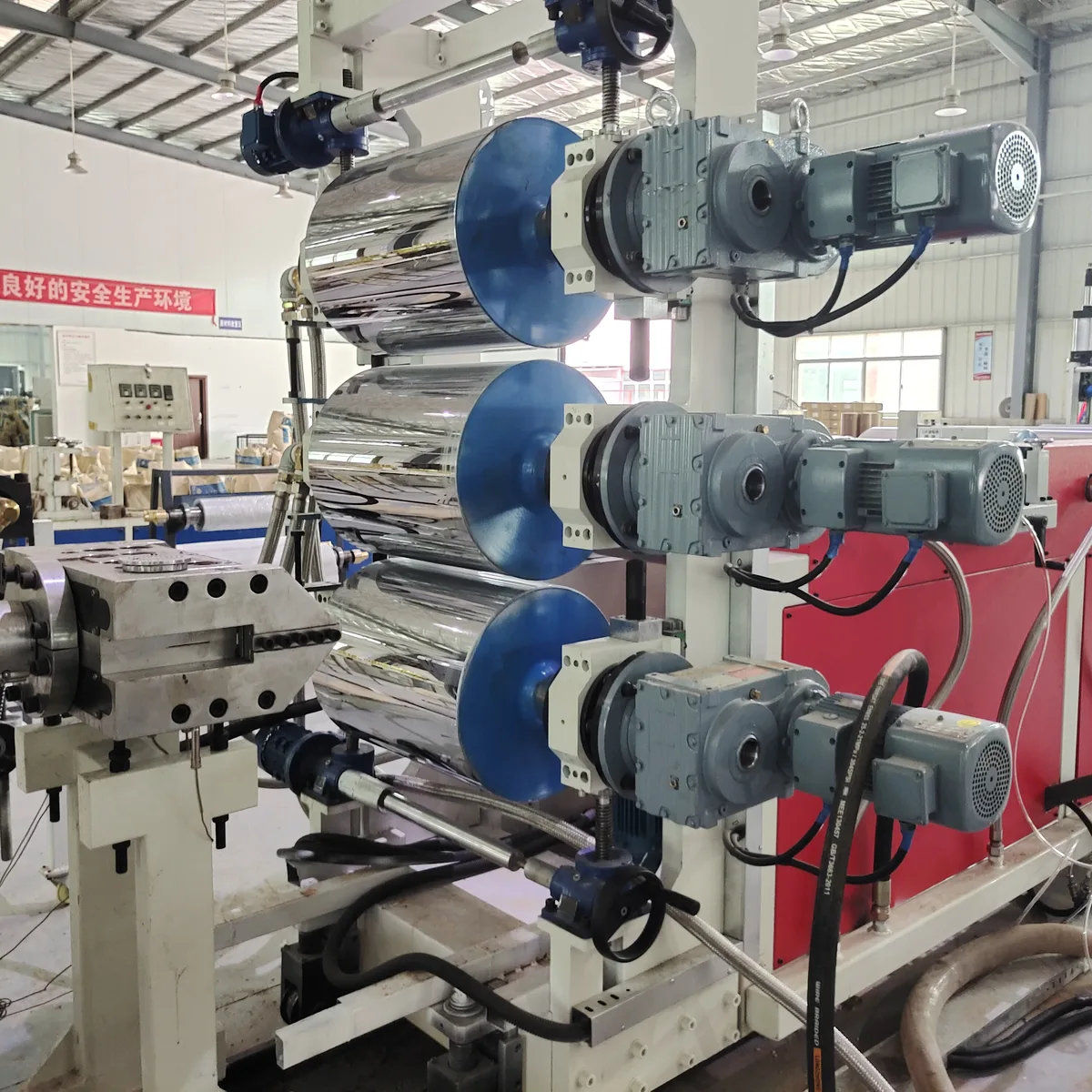
Pressure is the parameter most often set by feel and most often responsible for a weak joint.
Matching the Strip to the Bond
Once the bonding system is fixed, the strip specification follows from it:
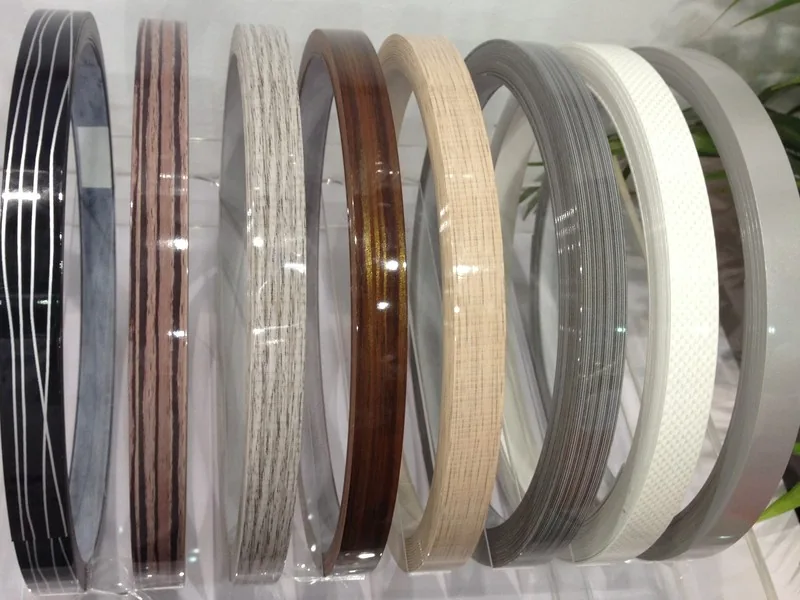
- Glue-line appearance. On hot air and laser, the strip must carry the correct functional layer. On EVA and PUR, the adhesive colour should be matched to the strip, not left at whatever is in the pot.
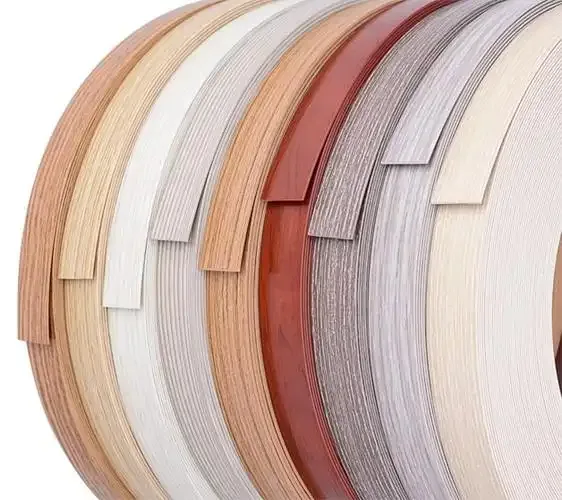
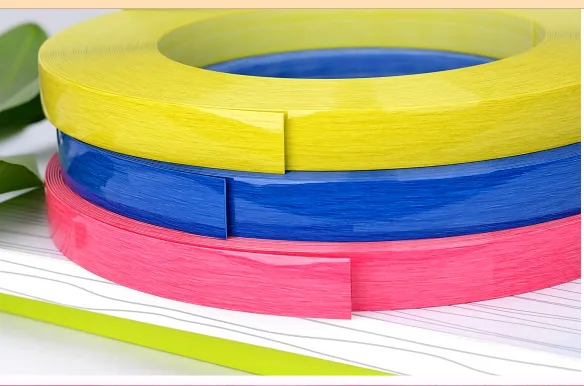
- Thickness. Our edge banding runs from 0.4 and 0.5mm for standard flat fronts up to 1, 2 and 3mm for post-forming, radiused and heavy-impact edges. Thicker strips need more heat and pressure to bond, which is a machine question as much as a material one.
- Material. PVC and ABS behave differently at the joint. PVC is more forgiving to trim and easier to colour-match to a PVC film; ABS takes impact better at very low temperatures.
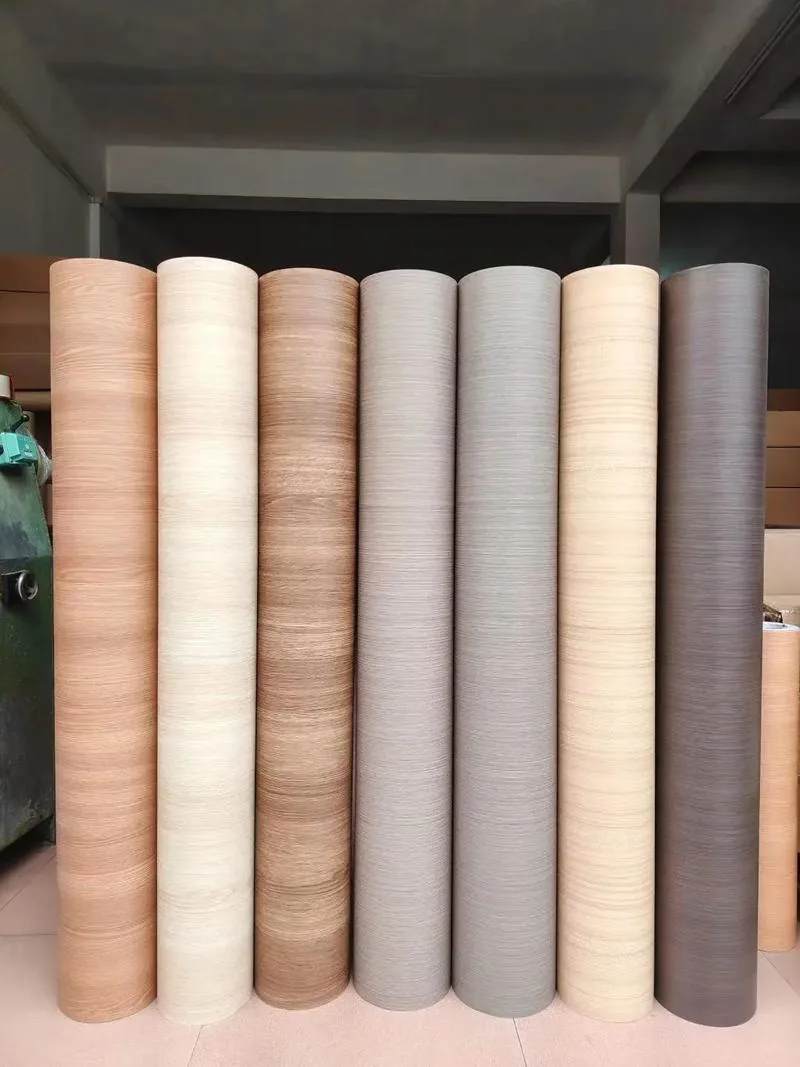
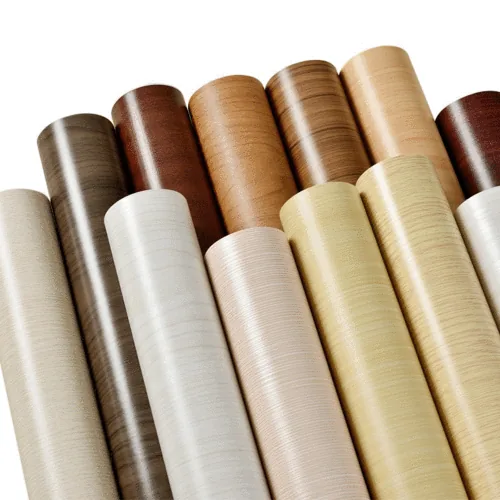
- Colour match. Where the edge sits against a film-wrapped face, both should come from the same design reference. Mismatched edges are what customers notice first.
Run These Checks Before Production
- Confirm the strip's functional layer matches your bonding system - particularly before a hot-air run.
- Record the actual glue temperature and feed rate, and keep the record with the batch.
- Run five panels, then leave them for 48 hours before judging the joint.
- Test one panel with a hot pan or kettle lid for ten minutes, and one wrapped in a damp cloth, if the application is a kitchen.
- Check the trimmed edge under raking light, which is how your customer will see it.
Five panels and two days is cheaper than a returned kitchen. Most edge banding complaints are traceable to a parameter that was set once and never re-checked after a blade change or a material switch.
Next read: PVC Edge Banding Thickness Guide: 0.4mm to 3mm
Chasing glue lines?
Tell us your machine, your adhesive and the strip you are running. We will recommend the strip specification that suits the bond.
Talk to a Process Engineer