PVC Edge Banding Thickness Guide: 0.4mm to 3mm
Published: August 10, 2026 | By GONGDA Team
PVC edge banding thickness isn't just a spec on a data sheet — it directly impacts durability, appearance, machinability and cost. Choosing the wrong thickness can mean edge peeling after six months, visible glue lines, or overspending on a spec your panels don't need. Here's what each thickness range is actually for.
Thickness Overview at a Glance
| Thickness | Best For | Application Method |
|---|---|---|
| 0.4–0.6mm | Budget furniture, RTA flat-pack, back panels | Hot-melt adhesive, automatic edge bander |
| 0.8–1.0mm | Residential furniture, wardrobe, kitchen interior | Hot-melt, PUR, automatic edge bander |
| 1.2–1.5mm | Mid-range kitchens, office desks, retail fixtures | PUR glue, laser edge bander |
| 2.0mm | Premium kitchens, commercial furniture, hotels | PUR or laser, pre-coated options |
| 3.0mm | High-end projects, curved/radius edges | Specialised radius edge bander |
0.4–0.6mm: The Economy Choice
Ultra-thin edge banding is the workhorse of budget and flat-pack furniture. It's lightweight, coils easily for automatic feeders, and the per-metre cost is the lowest in the category. However, it offers minimal impact protection — a knock against the edge can chip the underlying MDF or particleboard. Use it for:
- Back panels and internal shelves that aren't visible
- Budget bedroom sets sold through e-commerce channels
- Short-lifecycle promotional furniture
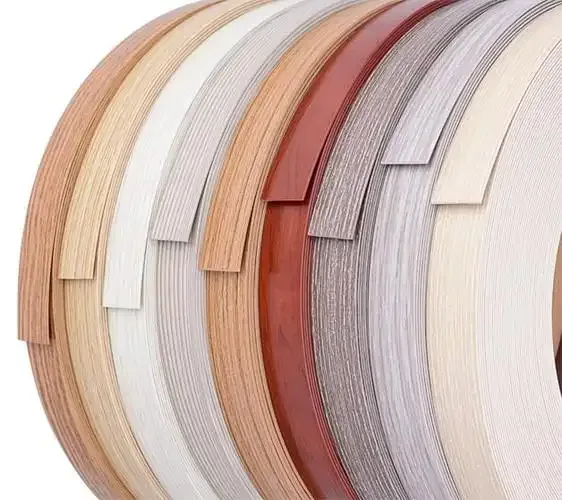
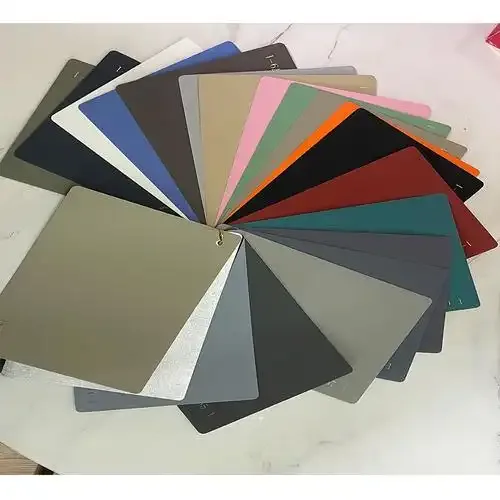
GONGDA recommendation: Our 0.5mm range includes 400+ colours matched to our decorative PVC films for seamless panel-to-edge matching.
0.8–1.0mm: The Residential Standard
This is the most commonly ordered thickness range globally. It provides a visible, rounded edge that looks intentional rather than minimal. Impact resistance is noticeably better than 0.5mm, and the edge can be lightly radiused (R1–R2) without exposing the substrate. This is the sweet spot for:
- Wardrobe doors and drawer fronts
- Kitchen cabinet doors in mid-range projects
- Office furniture where cost is balanced with durability
1.2–2.0mm: Commercial & Premium
Once you cross 1.2mm, the edge banding becomes a design feature rather than just edge protection. At 2.0mm you can achieve a soft radius (R3+) that mimics solid timber or solid-surface panels. These thicknesses are almost always applied with PUR (polyurethane reactive) hot-melt or laser technology, which creates a near-invisible, waterproof bond.
GONGDA's pre-coated laser edge banding at 1.5mm and 2.0mm uses a functional polymer layer that melts under the laser beam — no separate glue required, resulting in a zero-joint-line appearance that passes even close-up inspection.
3.0mm: High-End & Special Applications
Three-millimetre edge banding is the premium tier. It allows aggressive radius profiles and is often specified for curved reception desks, restaurant tables, and luxury retail displays. The thicker band also provides superior moisture sealing — critical in humid climates like Southeast Asia and coastal regions.
Note: 3.0mm PVC edge banding requires a specialised edge bander with the correct pressure rollers and trimming units. Not all standard machines can handle it, so check your equipment before ordering.
Key Buying Considerations
- Panel thickness: Match edge banding width to your board. Common boards: 16mm, 18mm, 25mm.
- Glue type: EVA hot-melt is cheapest but less water-resistant; PUR costs more but gives a waterproof, nearly invisible bond.
- Pre-coated vs standard: Pre-coated (laser-ready) edge banding eliminates the glue pot, reducing machine downtime and glue line visibility.
- MOQ flexibility: GONGDA offers mixed-colour orders — you don't need to buy a full roll of every shade.
Not sure which thickness fits your production line?
Tell us your board specs and edge bander model — we'll recommend the right match and ship samples.
Get Technical Advice