What Is Soft Touch PVC Film? A Complete Introduction
Published: August 11, 2026 | By GONGDA Team
If you have picked up a modern smartphone, run your hand across a premium kitchen cabinet door, or sat in a luxury car interior recently, you may have experienced it: that subtle, velvety, almost rubber-like surface that feels neither glossy nor rough. That is soft touch PVC film — one of the fastest-growing surface finishing technologies in the furniture, automotive, and consumer electronics industries.
What Exactly Is Soft Touch PVC Film?
Soft touch PVC film is a multi-layer decorative surface material where the topmost layer is formulated with a special matting agent and elastomeric additive that creates a microfine textured surface. When your fingers glide across it, the microscopic peaks and valleys scatter light diffusely — producing the matte look — while the elastomeric component gives a slight cushioning sensation, mimicking the feel of fine leather, suede, or powder-coated metal.
Unlike traditional glossy or standard matte PVC films, soft touch variants undergo an additional surface treatment stage during production. This can be achieved through:
- Chemical matting: Silica or polymeric matting agents dispersed in the topcoat lacquer
- Embossing: Precision roller embossing with nanometer-scale texture patterns
- Hybrid approach: Combining both chemical and mechanical methods for superior tactile consistency
The Science Behind the "Soft Touch" Sensation
The tactile experience is the result of three physical properties working together:
- Surface roughness (Ra value): Typically 0.5–2.0 μm — smooth enough not to feel rough, but textured enough to scatter light and reduce glare
- Coefficient of friction: Slightly higher than glossy films (0.3–0.5 vs 0.1–0.2), giving the surface a "grippy" feel without being sticky
- Hardness: Shore D 40–60 range — softer than standard PVC (Shore D 70+), contributing to the cushioning sensation
Material Composition: Layer by Layer
A premium soft touch PVC film typically consists of four functional layers:
| Layer | Thickness | Function |
|---|---|---|
| 1. Soft Touch Topcoat | 5–15 μm | Tactile feel, matte appearance, fingerprint resistance |
| 2. Print / Design Layer | 2–5 μm | Color, pattern, wood grain or solid color decoration |
| 3. PVC Base Film | 80–200 μm | Mechanical strength, flexibility, conformability |
| 4. Primer / Adhesion Layer | 2–5 μm | Bonding to substrate (MDF, particleboard, ABS, metal) |
Why Manufacturers Are Switching to Soft Touch
The global shift toward soft touch surfaces is driven by several market trends:
- Premium perception at mid-range cost: Soft touch PVC film gives furniture and electronics a luxury feel without the high cost of genuine leather, wood veneer, or powder coating
- Fingerprint resistance: The micro-textured surface naturally hides fingerprints and smudges — a huge advantage for kitchen cabinets, appliance panels, and touchscreens
- Anti-glare properties: Diffuse light reflection means no distracting glare under bright showroom or kitchen lighting
- Design differentiation: In a market saturated with glossy white and wood grain, soft touch offers a distinct tactile identity
Key Performance Specifications to Look For
When sourcing soft touch PVC film for export, verify these parameters with your supplier:
- Taber abrasion resistance: ≥ 300 cycles (CS-10 wheel, 500g load) for furniture-grade film
- UV resistance: Grey scale rating ≥ 4 after 500 hours QUV accelerated aging
- Chemical resistance: No visible change after 24-hour exposure to household cleaners, ethanol, and cooking oil
- Scratch resistance: ≥ 2N (Erichsen scratch tester) for the soft touch topcoat
- Heat resistance: Stable up to 80°C continuous, 100°C short-term — critical for kitchen applications
GONGDA Soft Touch PVC Film
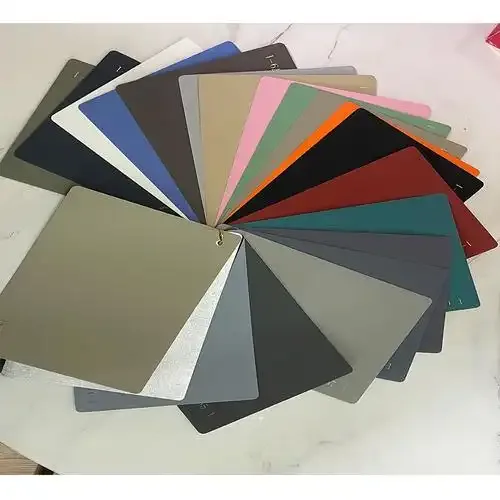
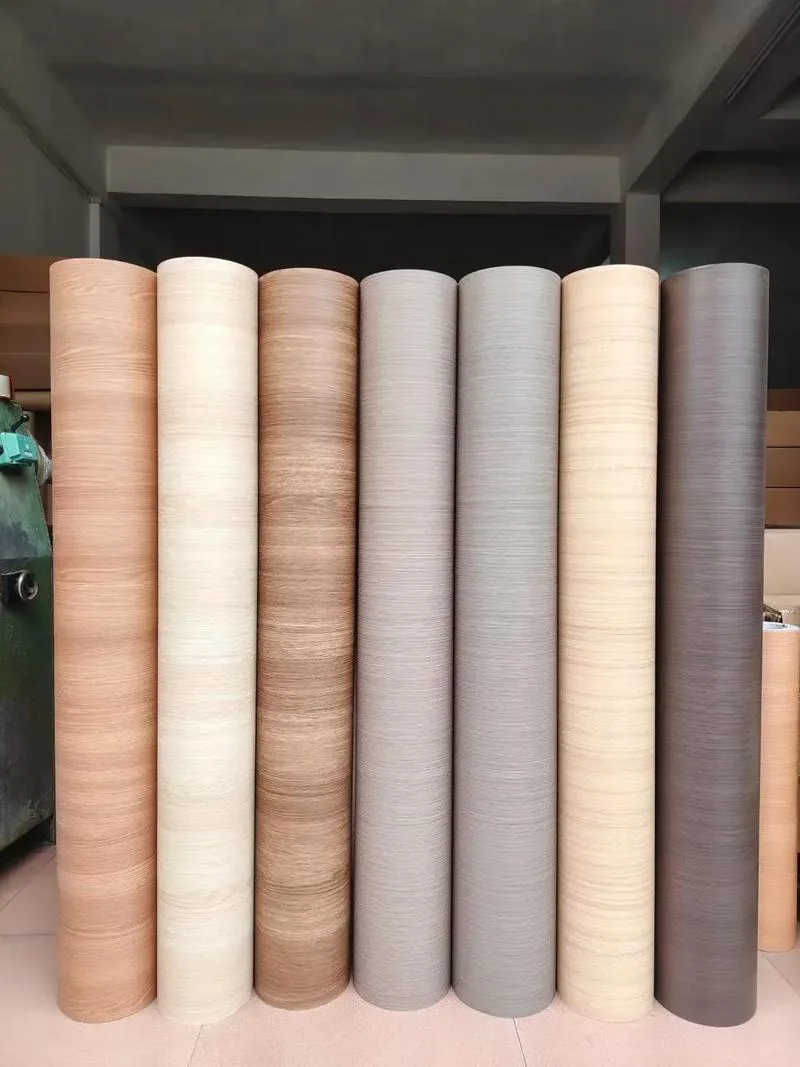
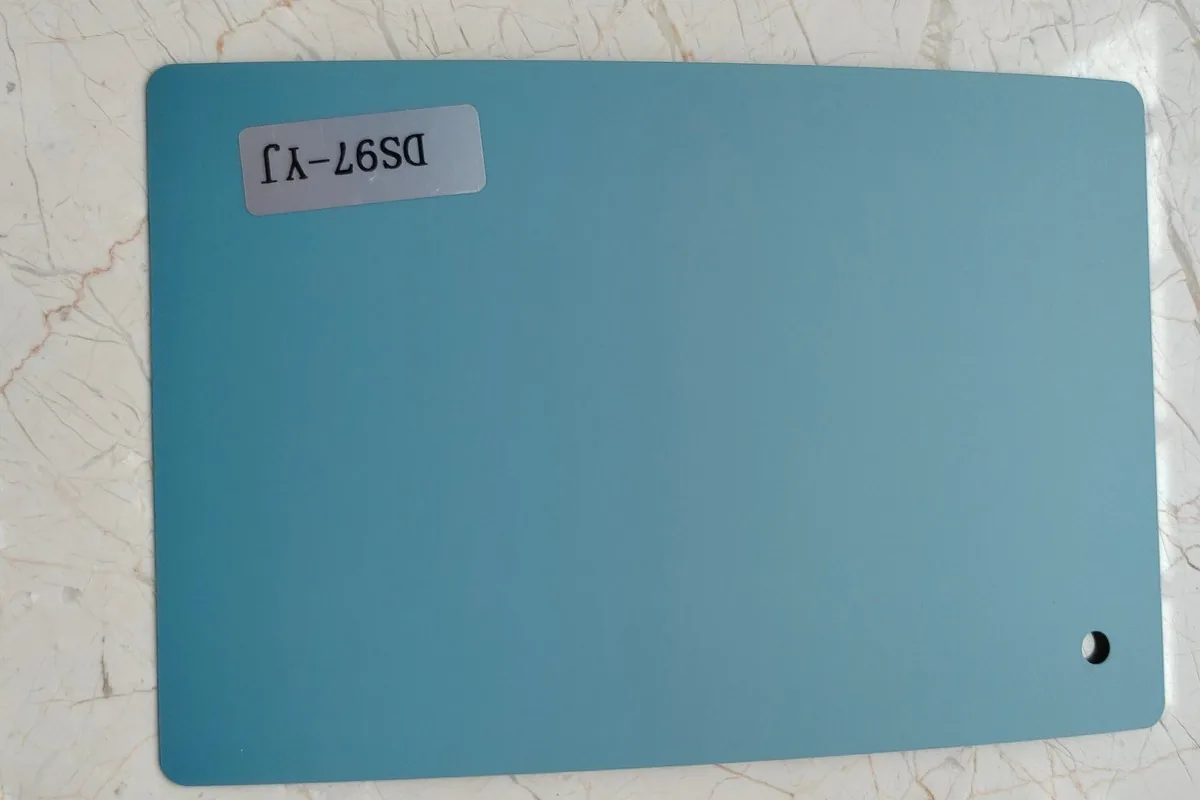
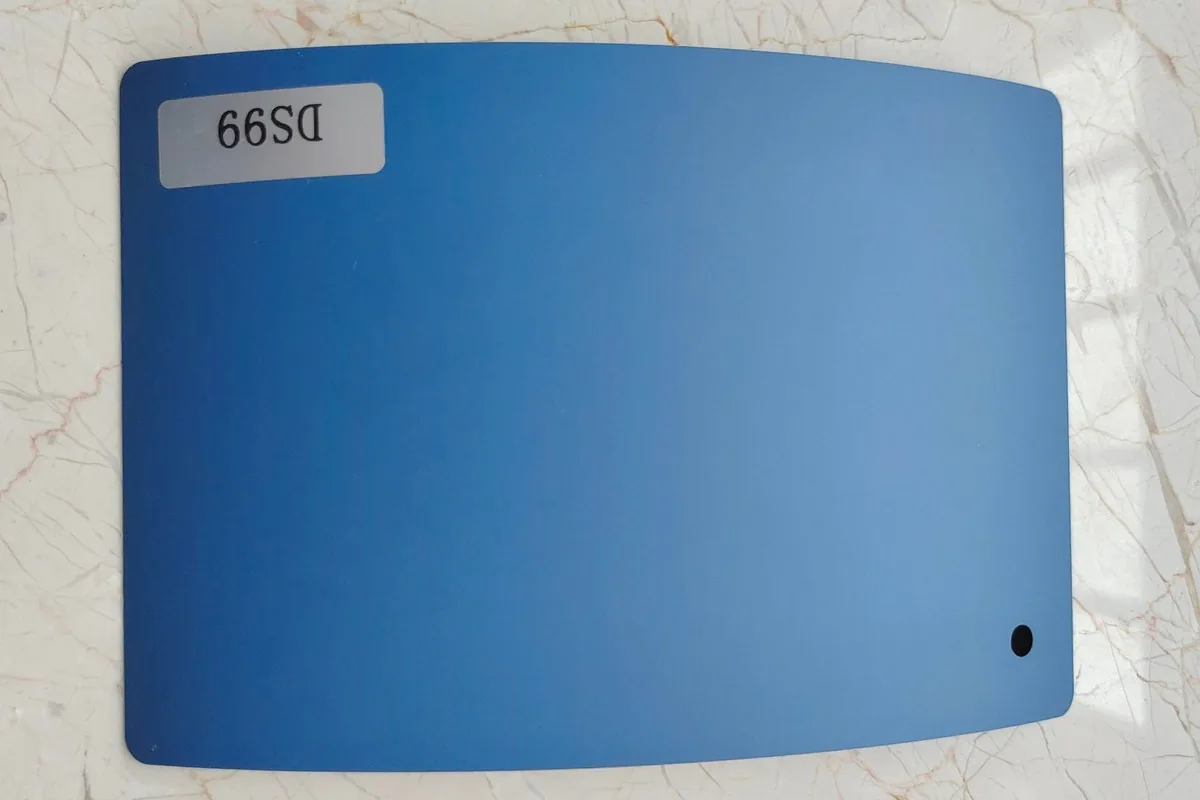
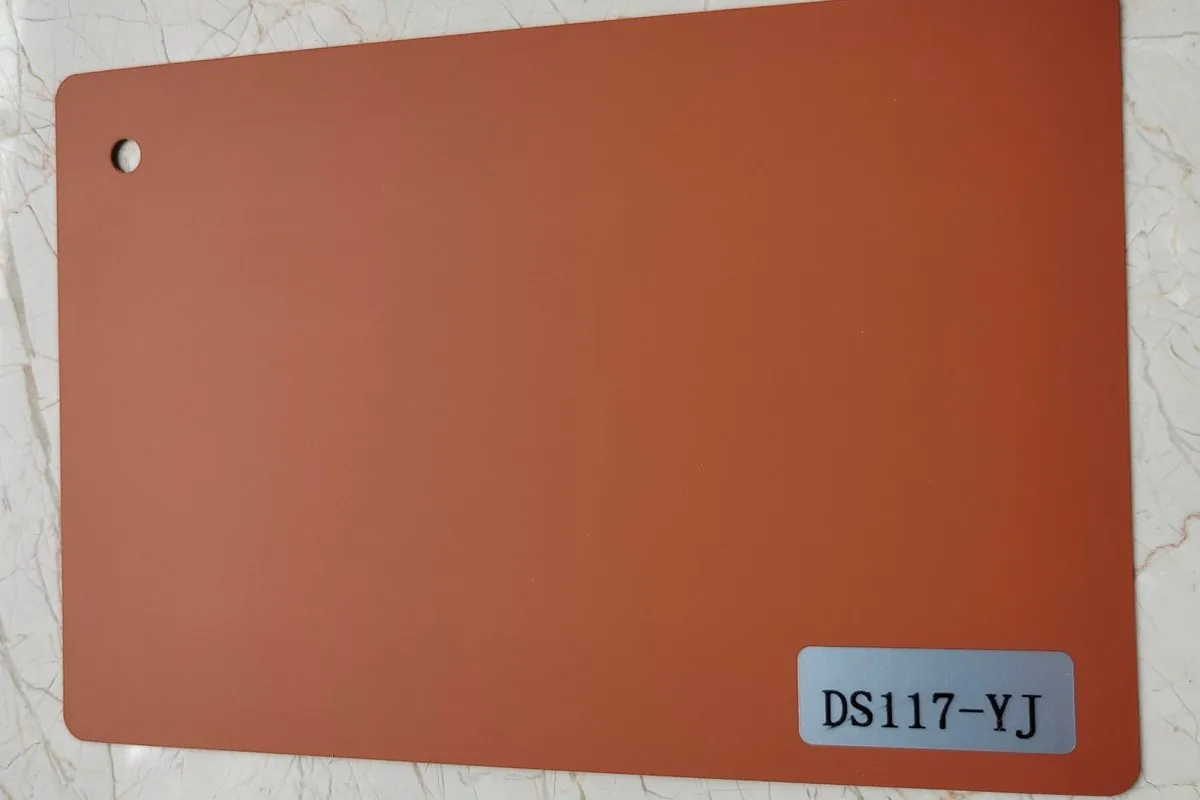
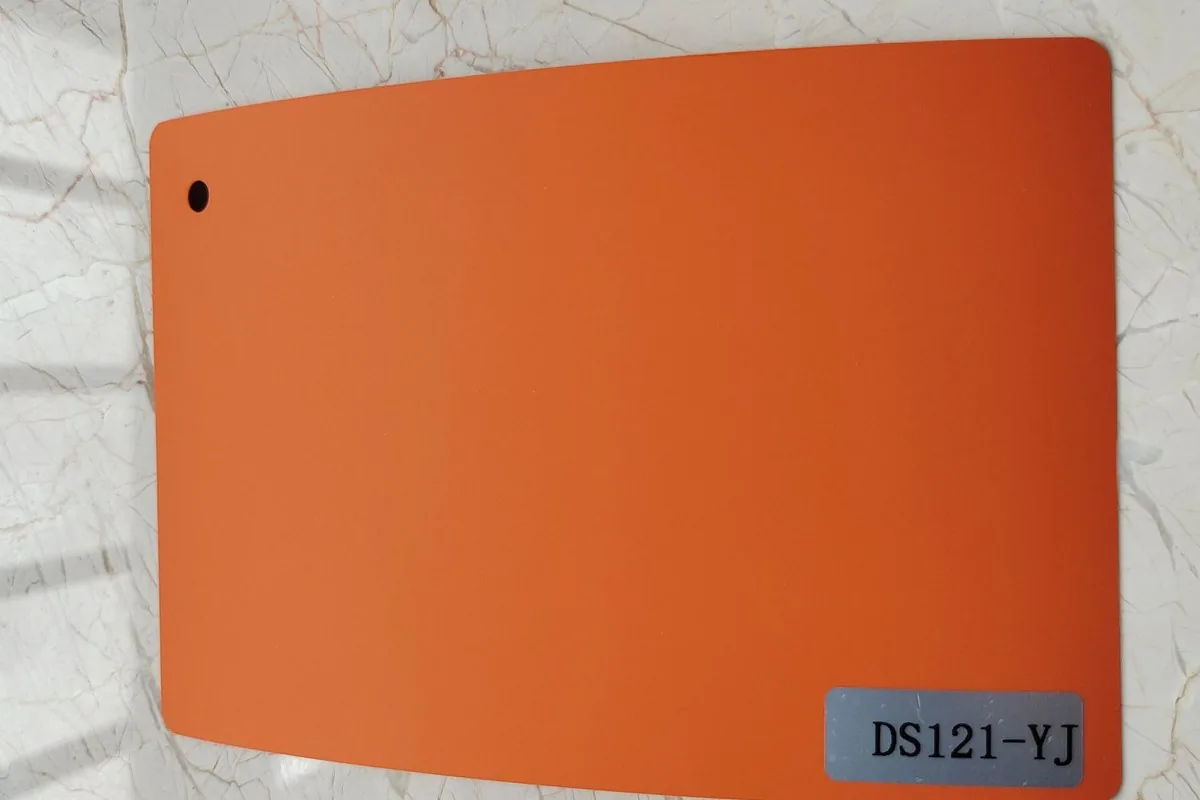
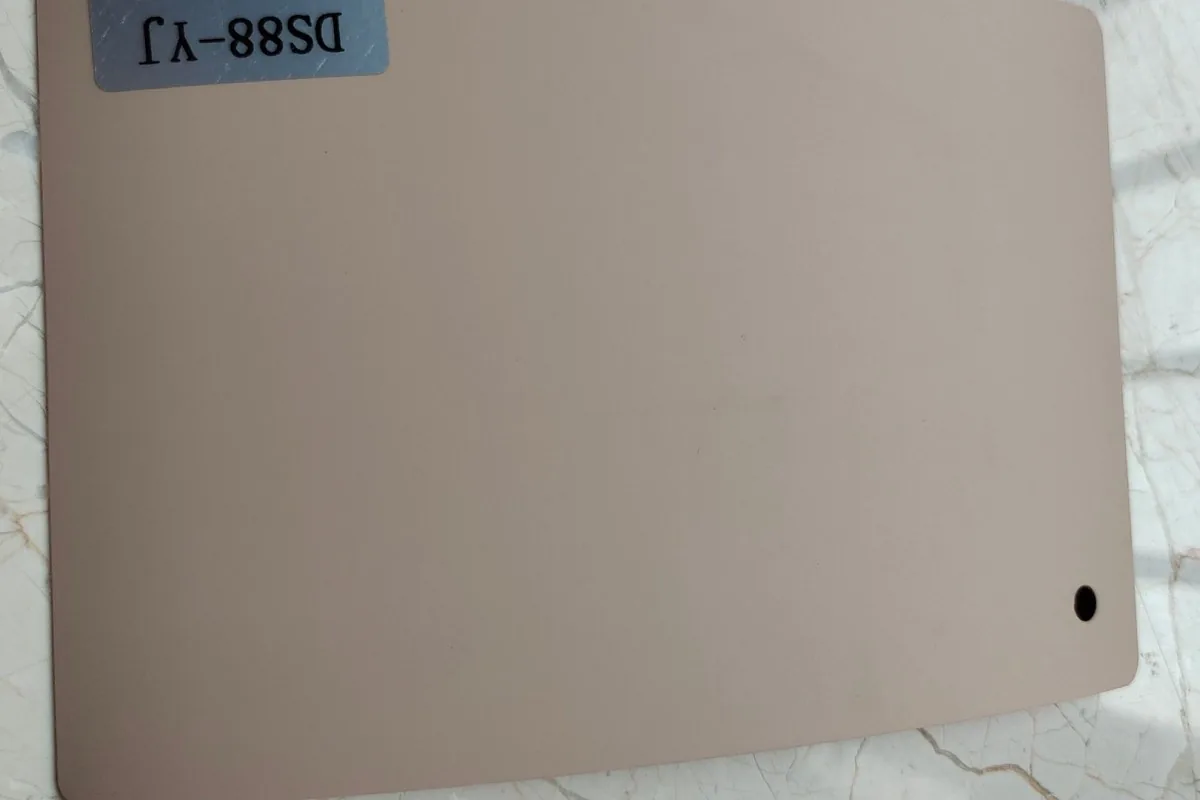
Our soft touch PVC film portfolio includes 50+ solid colors and 30+ wood grain designs with the soft touch finish. Available in widths from 1,260mm to 1,560mm, thicknesses from 0.12mm to 0.55mm, and with REACH, RoHS, and ISO 9001 certification. Every design can be sampled as a free A4 swatch — just reach out to our team.
Application Methods: Choosing the Right Process
Soft touch PVC film can be applied using several manufacturing methods, each suited to different production volumes and product types:
- Hot-melt lamination (EVA): Most common for high-volume furniture production. Fast cycle times (3-5 seconds per panel), suitable for flat panels and simple profiles
- PUR lamination: Used for premium kitchen cabinets and bathroom vanities where moisture resistance is critical. Provides superior bond strength and durability
- Vacuum pressing: Ideal for 3D profiles, raised-panel doors, and intricate mouldings. Requires lower production speeds but delivers exceptional conformability
- Pre-glued self-adhesive: Best for small workshops and on-site installation. Peel-and-stick application eliminates the need for laminating equipment
Processing Tips for Soft Touch Films
Soft touch surfaces require slightly different handling than standard gloss films:
- Temperature control: Maintain lamination temperature at 120-140°C. Higher temperatures can cause the soft touch topcoat to become tacky
- Pressure settings: Use moderate pressure to avoid flattening the micro-texture. Excessive pressure reduces the tactile feel
- Trimming: Use sharp carbide knives and adjust trimmer height to 0.5-1.0mm above the substrate surface
- Cooling: Allow adequate cooling time before handling to prevent surface marring
Market Growth & Adoption Trends
The global soft touch PVC film market has grown at a CAGR of 8-12% over the past five years, driven by:
- Smartphone industry: Premium phone cases and laptop covers pioneered soft touch finishes, creating consumer expectations that spilled into furniture and automotive
- Kitchen renovation boom: Post-pandemic home improvement spending accelerated adoption of premium surfaces in residential kitchens
- Automotive interiors: Mid-range vehicle manufacturers now offer soft touch dashboard and door panel options as standard features
- Consumer electronics: TV bezels, speaker grilles, and home appliance panels increasingly feature soft touch finishes
Regional Adoption Patterns
| Region | Adoption Rate | Key Applications |
|---|---|---|
| Europe | High (45%+ of new kitchen orders) | Kitchen cabinets, bathroom vanities, furniture |
| North America | Medium-High (30-40%) | Cabinets, electronics, automotive interiors |
| Middle East | Medium (20-30%) | Luxury hospitality, high-end residential |
| Southeast Asia | Growing (15-25%) | Urban furniture, office fit-outs |
| Africa | Low-Medium (5-15%) | Premium segments only |
Care & Maintenance Guidelines
Soft touch surfaces are durable but require proper care to maintain their appearance over time:
- Daily cleaning: Use a soft, dry microfiber cloth to remove dust and fingerprints
- Deep cleaning: Damp cloth with mild soap solution; avoid abrasive cleaners or scouring pads
- Stain removal: Most stains wipe off easily; for stubborn marks, use isopropyl alcohol (70%) on a soft cloth
- Avoid: Solvent-based cleaners, ammonia, bleach, and acidic substances that can degrade the topcoat
- Protection: Use coasters and placemats; avoid placing hot objects directly on the surface
Next read: Soft Touch vs Glossy vs Matte: Which PVC Film Finish Is Right for Your Product?
Want to feel the difference yourself?
Request a free soft touch PVC film sample pack. We ship within 48 hours.
Request Free Samples