How Soft Touch PVC Film Is Made: Inside the Production Line
Published: August 11, 2026 | By GONGDA Team
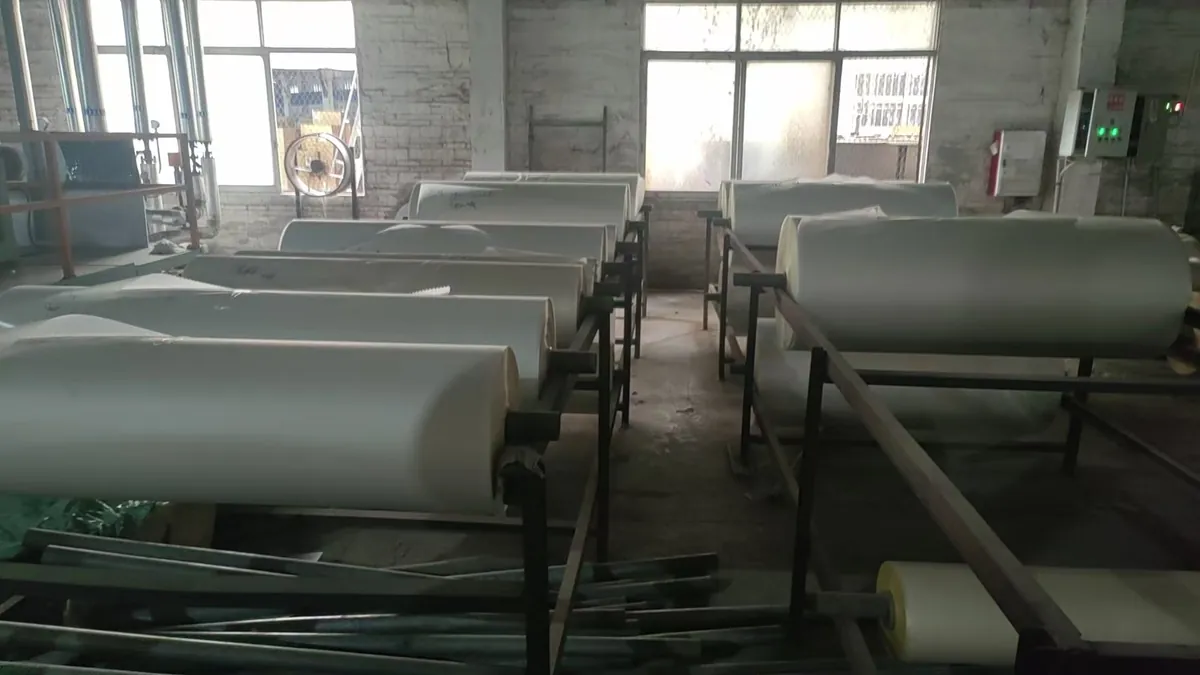
Every meter of soft touch PVC film that leaves the factory has passed through a carefully sequenced multi-stage production line. Understanding this process is useful for anyone sourcing PVC decorative film — it helps you evaluate supplier capability, spot quality differences, and appreciate why premium grades cost more. Here is the full walkthrough, from raw material to finished roll.
Stage 1: Raw Material Formulation & Mixing
The process begins with the precise weighing and blending of raw materials in high-speed mixers (1,000–1,500 RPM):
- PVC resin (S-PVC): Suspension-grade PVC with K-value 62–68 — the structural backbone
- Plasticizers (DINP / DOTP): 20–40 phr (parts per hundred resin) for flexibility and conformability
- Stabilizers (Ca/Zn): Heat stabilizers to prevent degradation during processing at 160–200°C
- Processing aids: Acrylic-based for improved melt strength and surface quality
- Pigments: Masterbatch colorants for the base film color
- Fillers (CaCO₃): Calcium carbonate for cost optimization and opacity (typically 5–15 phr)
The dry blend is heated to 110–120°C during mixing to ensure plasticizer absorption into the PVC particles. The result is a free-flowing powder called dry blend — ready for the calender.
Stage 2: Calendering — Forming the Base Film
The dry blend enters a four-roll or five-roll calender — a series of precision-ground, heated steel rollers that compress and fuse the powder into a continuous film. Key parameters:
- Roll temperatures: 160–200°C, progressively hotter through the calender stack
- Roll gap: Precisely controlled (±2 μm) to achieve target film thickness
- Friction ratio: Adjacent rolls run at slightly different speeds (1:1.05 to 1:1.10) for additional shear mixing and surface polishing
After the calender, the film passes through embossing rollers if a textured base is required, then through a series of cooling drums that bring the temperature down to 30–40°C. At this stage, the film is a plain, unprinted PVC sheet — the canvas for decoration.
Stage 3: Surface Treatment — Corona / Primer
Before printing, the film surface must be activated to ensure ink adhesion. This is done via corona discharge treatment, which bombards the film surface with high-voltage plasma, creating polar functional groups that increase surface energy from ~32 dynes/cm to ≥ 42 dynes/cm. Some manufacturers also apply a thin primer coating (1–2 μm) for additional adhesion security.
Stage 4: Printing — Gravure or Digital
The decorative layer is applied using rotogravure printing — the industry standard for PVC film. Gravure cylinders, each engraved with a different color separation, transfer solvent-based or water-based inks onto the film surface in precise registration (±0.1 mm). A typical wood grain design uses 4–6 color cylinders; complex marble patterns may use up to 8.
After each color station, the film passes through a drying oven (60–80°C) before the next color is applied. Total printing line speed: 40–80 meters per minute depending on design complexity.
Stage 5: The Soft Touch Topcoat — Where the Magic Happens
This is the critical stage that transforms standard printed PVC film into soft touch PVC film. The topcoat is applied via:
- Gravure coating: A dedicated coating cylinder applies a precisely metered layer (5–15 μm wet) of the soft touch lacquer
- Lacquer composition: Polyurethane or acrylic-based resin + silica matting agent (2–8 μm particle size) + elastomeric additive + solvent
The coating is then cured in a multi-zone oven at 80–120°C for 30–60 seconds, during which the solvent evaporates and the resin crosslinks into a durable, micro-textured film. The matting agent particles protrude slightly from the cured surface, creating the light-scattering micro-texture that gives the visual matte effect.
Stage 6: Backside Primer Coating
The back (substrate-facing) side of the film receives a primer or adhesion promoter (2–5 μm) to ensure strong bonding during the customer's lamination process. This primer is formulated to be compatible with common adhesives — PUR hot melt, EVA, and solvent-based contact adhesives — and substrates including MDF, particleboard, plywood, and ABS.
Stage 7: Slitting & Rewinding
The jumbo roll (typically 1,260–1,560 mm wide, 500–1,000 meters long) is slit to the customer's specified width using razor or shear slitters. Tension control is critical here — excessive tension can stretch the film and affect the embossed texture. Finished rolls are wound on 3-inch or 6-inch cores, wrapped in PE film, and packed in corrugated boxes for shipment.
Stage 8: Quality Control Testing
Every production batch undergoes standardized QC testing:
| Test | Standard | Pass Criteria |
|---|---|---|
| Thickness | ISO 4593 | ±5% of nominal |
| Gloss level | ASTM D523 (60°) | 1–5 GU for soft touch |
| Color difference | CIE Lab ΔE | ΔE ≤ 1.0 vs master standard |
| Adhesion | Cross-cut (ISO 2409) | Grade 0–1 |
| Scratch resistance | Erichsen (internal) | ≥ 2N |
| Chemical resistance | EN 12720 | No visible change |
Why Production Quality Matters for Buyers
A well-made soft touch PVC film is the result of tight process control at every stage. When evaluating suppliers, ask about their calendering line precision, gravure registration capability, and QC lab equipment. A supplier that invests in quality at Stage 1–3 produces film that laminates cleanly and lasts for years. A supplier that cuts corners at any stage produces film that delaminates, scratches easily, or has inconsistent color batch-to-batch.
Related: What Is Soft Touch PVC Film? | Durability & Maintenance of Soft Touch PVC Film
Want to see our production quality?
We provide factory audit reports, ISO certificates, and free samples for your evaluation.
Request Quality Docs & Samples